“Working with AI: Real Stories of Human-Machine Collaboration” with Professor Thomas Davenport and Professor Steven Miller

Working with AI Reviewed at Bridging the Gaps

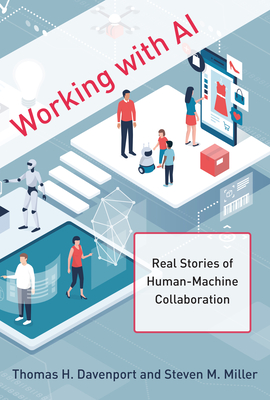
There is a widespread view that artificial intelligence is a job destroyer technical endeavour. There is both enthusiasm and doom around automation and the use of artificial intelligence-enabled “smart” solutions at work. In their latest book “Working with AI: Real Stories of Human-Machine Collaboration”, management and technology experts professor Thomas Davenport and professor Steven Miller explain that AI is not primarily a job destroyer, despite popular predictions, prescriptions, and condemnation. Rather, AI alters the way we work by automating specific tasks but not entire careers, and thus freeing people to do more important and difficult work. In the book, they demonstrate that AI in the workplace is not the stuff of science fiction; it is currently happening to many businesses and workers. They provide extensive, real-world case studies of AI-augmented occupations in contexts ranging from finance to the manufacturing floor.

In this episode of Bridging the Gaps I speak with professor Thomas Davenport and professor Steven Miller to discuss their fascinating research, and to talk through various case studies and real work use cases that they outline in the book. We discuss the impact of Artificial intelligence technologies on the job market and on the future of work. We also discuss future hybrid working environments where AI and Humans will work side by side.

Professor Thomas Davenport is a Distinguished Professor of Information Technology and Management at Babson College, a visiting professor at the Oxford University and a Fellow of the MIT Initiative on the Digital Economy. Steven Miller is Professor Emeritus of Information Systems at Singapore Management University.

We begin our discussion by looking at various aspects of the environments where AI and human workers work side by side, and then discuss the concept of Hybrid Intelligence. Then we talk about the challenges that organisations are faced with while developing and implementing Artificial Intelligence enabled technologies and solutions in enterprise environments. An important question that I raise during our discussion is, are the organisations ready for large scale deployment of AI solutions. The book is full of real world case studies and covers a wide variety of use cases. We delve into a number of these real world case studies and use cases. This has been a very informative discussion.

Complement this discussion with “The Technology Trap” and the Future of Work” with Dr Carl Frey and then listen to “Machines like Us: TOWARD AI WITH COMMON SENSE” with Professor Ronald Brachman

By |October 31st, 2022|Artificial Intelligence, Computer Science, Future, Podcasts, Technology|

“Machines like Us: TOWARD AI WITH COMMON SENSE” with Professor Ronald Brachman

Machines Like us reviewed on Bridging the Gaps

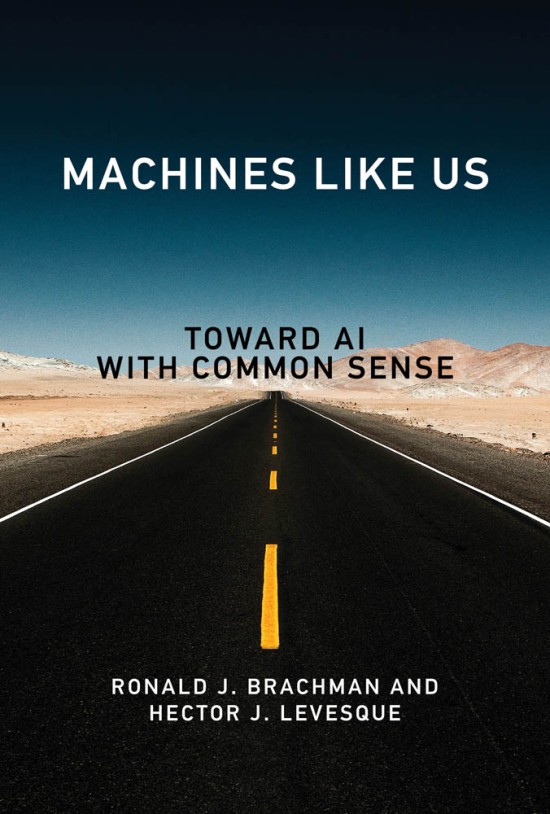
There is a consensus among the researchers in the field of artificial intelligence and machine learning that today’s artificial intelligence systems are narrowly focused, are designed to tackle specialised tasks and cannot operate in general settings. An important feature of the human brain that enables us to operate in general settings, and in unfamiliar situations is our common sense. In their new book “Machines like Us:
TOWARD AI WITH COMMON SENSE” Hector Levesque and Ronald Brachman explain “why current AI systems hopelessly lack common sense, why they desperately need it, and how they can get it”. In this episode of Bridging the Gaps, I speak with Professor Ronald Brachman, one of the authors of this book. We discuss various topics covered in the book and explore the question, how we can create artificial intelligence with broad, robust common sense rather than narrow, specialised expertise.

Professor Ron Brachman is the director of the Jacobs Technion-Cornell Institute and is a professor of computer science at Cornell University. Previously, he was the Chief Scientist of Yahoo! and head of Yahoo! Labs. Prior to that, he was the Associate Head of Yahoo! Labs and Head of Worldwide Labs and Research Operations.

We start off with a detailed discussion about the progress that we have made in recent decades, in developing narrowly focused and task oriented artificial intelligence systems. Some of these systems outperform humans; however we do acknowledge and discuss the need for developing artificial intelligence systems that can operate in general settings. We discuss the concept of artificial general intelligence and explore how understanding “human common sense” and equipping AI with common sense is an extremely important milestone in our journey toward developing artificial general intelligence. We discuss the challenge of developing a clear and thorough understanding of the nature and working of human common sense. We explore how “common sense” might be modelled and incorporated in future artificial intelligence systems. We then discuss the future of artificial general intelligence.

Complement this discussion with Artificial Intelligence: A Guide for Thinking Humans” with Professor Melanie Mitchell and with Artificial Intelligence: Fascinating Opportunities and Emerging Challenges with Professor Bart Selman and then listen to 2062: The World That AI Made” with Professor Toby Walsh

“The Next 500 Years: Engineering Life to Reach New Worlds” with Professor Christopher Mason

We are the only known species that understands species go extinct. We also understand that climate calamity, apocalyptic war, or the demise of the sun in a few billion years will all inevitably bring life on Earth to an end. So it is extremely important we do whatever we can to avoid extinction. We have a moral obligation to prevent extinction, and we have a responsibility to act as life-form shepherds—not just for our species, but for all species on which we rely, as well as those yet to come. This may involve finding a new home planet, developing innovative ways to undertake long haul space journeys. This may also involve re-engineering life and human genetics for travelling to, and for surviving on other worlds. Dr Christopher Mason argues in his provocative and engaging book “The Next 500 Years: Engineering Life to Reach New Worlds” that we have a moral duty to do just that. In this episode of Bridging the Gaps I speak with Dr Christopher Mason and we discuss his inspiring vision of the next 500 years of spaceflight and human exploration.

Dr Christopher Mason is a professor of genomics, physiology, and biophysics at Weill Cornell Medicine and the Director of the WorldQuant Initiative for Quantitative Prediction. He is a geneticist and computational biologist who has been a Principal Investigator and Co-investigator of 11 NASA missions and projects.

We start by discussing the moral obligation, moral duty that we must protect our species against extinction and to ensure that life continues. We discuss the impact of living in hard and unfamiliar environment of space on the human body and talk through the findings of “the Twin Study” which examines the impact of nearly a full year in space on astronaut Scott Kelly, using his identical brother Mark as control. We then discuss moral and ethical dimensions of engineering life and making changes in human genome and undertaking genetic modifications of humans. We review the 500 years plan that Dr Chris Mason presents in this book and go through various phases of this plan. We talk about engineering of genomes, cellular engineering, synthetic biology and preparing humans for long haul space flights. We discuss in detail how CRISPR tool works and what it enables us to do. We also discuss feature and functional re-engineering of the human genome by borrowing features and functions from other species. We once again touch upon moral, ethical, and social implications of re-engineering life and try to imagine a future full of variety of life forms evolved through directed and iterative re-engineering of life, coming from the same source that is human.

Complement this discussion with The End of Astronauts”, Robotic Space Exploration and Our Future on Earth and Beyond with Professor Martin Rees and then listen to “Nano Comes to Life”: DNA NanoTech, Medicine and the Future of Biology with Professor Sonia Contera

By |May 19th, 2022|Biology, Future, Physics, Podcasts, Research|