“Spark: The Life of Electricity and the Electricity of Life” with Professor Timothy Jorgensen
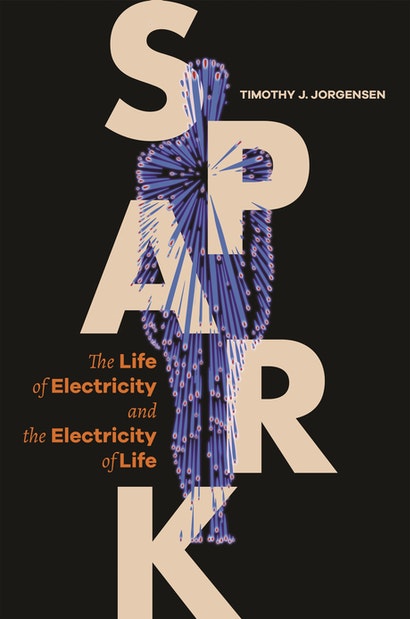
Spark Book Review at Bridging the Gaps

When we think about electricity, we most often think of the energy that powers various devices and appliances around us, or perhaps we visualise the lightning-streaked clouds of a stormy sky. But there is more to electricity and “life at its essence is nothing if not electrical”. In this episode of Bridging the Gaps, I speak with Professor Timothy Jorgensen and we discuss his recent book “Spark: The Life of Electricity and the Electricity of Life ”. The book explains the science of electricity through the lenses of biology, medicine and history. It illustrates how our understanding of electricity and the neurological system evolved in parallel, using fascinating stories of scientists and personalities ranging from Benjamin Franklin to Elon Musk. It provides a fascinating look at electricity, how it works, and how it animates our lives from within and without.

We start by discussing the earliest known experiences that humans had with electricity using amber. Amber was most likely the first material with which humans attempted to harness electricity, mostly for medical purposes. Romans used non-static electricity from specific types of fish. Moving on to Benjamin Franklin, we discuss how he attempted to harner the power of electricity and we discuss the earliest forms of devices to store electric charge. We then discuss experiments conducted by Luigi Galvani on dead frogs and by his nephew on dead humans using electricity. As interest in electricity grew, many so-called treatemnts for ailments such as headaches, for bad thoughts and even for sexual difficulties also emerged that were based on the use of electricity; we discuss few interesting examples of such treatments. We then move on to reviewing the cutting edge use of electricity in medical science and discussed medial implants, artificial limbs and deep stimulation technologies and proposed machine-brain interfaces. This has been a fascinating discussion.

Complement this discussion by listening to he Spike: Journey of Electric Signals in Brain from Perception to Action with Professor Mark Humphries and then listen to On Public Communication of Science and Technology with Professor Bruce Lewenstein
By |March 17th, 2022|Artificial Intelligence, Biology, Future, Podcasts, Research|

Asking Better Questions for Creative Problem Solving, Innovation and Effective Leadership with Hal Gregersen

Questions are the Answers discussed at Bridging the Gaps

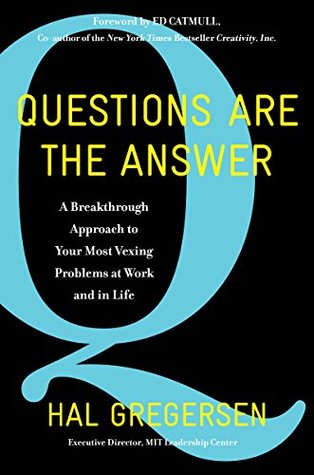
Every problem or issue raises new questions, which must be correctly answered in order to address the problem or resolve the issue. What if we could get a better answer to our most troublesome problem—at work or at home—just by altering the question? If asking right questions is essential for creative problem solving and innovation, and for effective leadership, shouldn’t we know more about how to arrive at right questions? In his book “Questions Are the Answer: A Breakthrough Approach to Your Most Vexing Problems at Work and in Life” Hal Gregersen gives many examples of people who had used questions in specific ways to solve problems. He gives many examples of how managers have used questioning in a variety of ways to obtain better results and provides additional information sources on key topics for those who want to dig deeper. In this episode of Bridging the Gaps I speak with Hal Gregersen.

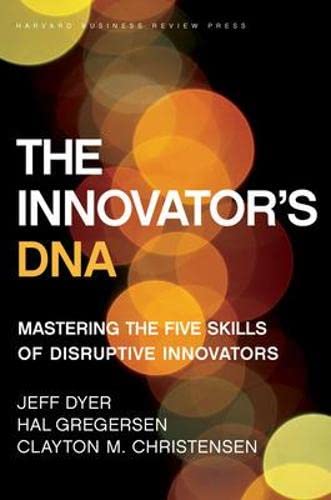
Hal Gregersen is a senior lecturer in leadership and innovation at MIT Sloan School of Management. He is a former executive director of the MIT Leadership Center and a cofounder of the Innovator’s DNA consulting group. He is a prolific author and a motivational speaker, and has helped leaders around the world to create cultures of fearless inquiry and to transform their organizations into innovative powerhouses. He is one of the authors of “The Innovator’s DNA: Mastering the Five Skills of Disruptive Innovators” a book cited by managers, creative problem-solvers and leaders around the world as a highly recommended read for anyone interested in innovation.

I open the discussion by asking Hal Gregersen about the evolving and ever changing landscape of leadership. We then discuss catalytic and recursive questions. How to learn to ask the right questions is essential for creative problem solving; we discuss this.

Innovator's DNA discussed at Bridging the Gaps

Although the primary focus of this discussion is on Gregersen’s book “Questions are Answer: A Breakthrough Approach to Your Most Vexing Problems at Work and in Life”, we do touch upon the book that he co-authored “The innovator’s DNA: Mastering the five skills of disruptive innovators”. I ask him to outline, compare and rate these five skills of disruptive innovators. We then discuss how leadership should evolve in this age of “working from home”. Finally I ask him for tips and suggestions for our young listeners and for future leaders; what skills they should acquire so that they are ready to meet future challenges. This has been a fascinating and highly informative discussion.

Complement this discussion with Growth Mindset: A Must Have Tool for Success with Professor Carol Dweck and then listen to Multiple Intelligences, Future Minds and Educating The App Generation: A discussion with Dr Howard Gardner

By |February 27th, 2022|Future, Knowledge, Podcasts|

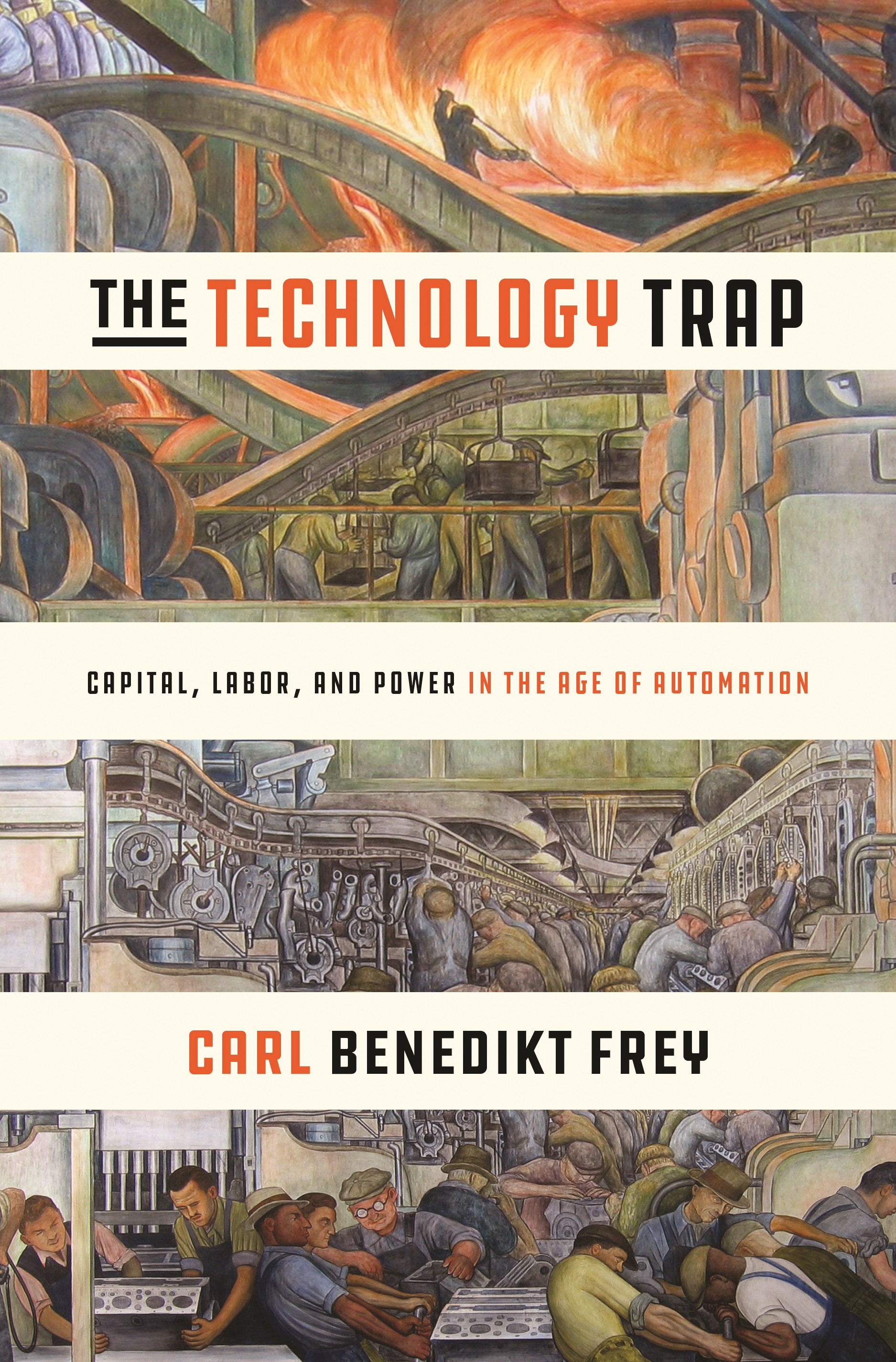
“The Technology Trap” and the Future of Work with Dr Carl Frey

An intriguing set of questions that is being explored by researchers across the globe and is being discussed and brainstormed in various organisations and think tanks is: “what is the future of work”; “how forthcoming AI and Automation revolution will impact on the nature and structure of work”; and “what would be the impact of these changes on the fabric of society from social, economic and political perspectives”.

In a 2013 study “The Future of Employment: How Susceptible are Jobs to Computerisation?” researchers Dr Carl Benedikt Frey and Dr Michael Osborne made an important observation: about 47% jobs in the US will be lost to automation. Dr Carl Frey is the co-director of programme on technology and employment at Oxford Martin School at Oxford University. His research focuses on “how advances in digital technology are reshaping the nature of work and jobs and what that might mean for the future”. In 2016, he was named the 2nd most influential young opinion leader by the Swedish business magazine Veckans Affärer.

A recent book by Dr Carl Frey presents a thorough review of the history of technological progress and how it has radically shifted the distribution of economic and political power among society’s members. The title of the book is “The Technology Trap: Capital, Labour and Power in the Age of Automation”. The Industrial Revolution was a defining moment in history, but few grasped its enormous consequences at the time. This books demonstrates that the lessons of the past can help us to more effectively face the present and the forthcoming AI and automation revolution.
Dr Carl Frey shows the Industrial Revolution created unprecedented wealth and prosperity over the long run, but the immediate consequences of mechanization were devastating for large swaths of the population. Middle-income jobs withered, wages stagnated, the labour share of income fell, profits surged, and economic inequality skyrocketed. These trends, Frey documents, broadly mirror those in our current age of automation, which began with the Computer Revolution.

Just as the Industrial Revolution eventually brought about extraordinary benefits for society, artificial intelligence systems have the potential to do the same. But Frey argues that this depends on how the short term is managed. The decisions that we make now and the policies that we develop and adopt now will have profound impact on the future of work and job market. In the nineteenth century, workers violently expressed their concerns over machines taking their jobs. The Luddite uprisings joined a long wave of machinery riots that swept across Europe and China. Today’s despairing middle class has not resorted to physical force, but their frustration has led to rising populism and the increasing fragmentation of society. As middle-class jobs continue to come under pressure, there’s no assurance that positive attitudes to technology will persist.

Dr Carl Frey joins me for this episode of bridging the Gaps. In this podcast we discuss the ideas that Dr Frey presents in this book. Before discussing the future of work, we look at the history of work and how the nature of work evolved through various ages and how did it impact the equality in the society. Dr Frey notes in his book that the age of inequality began with the Neolithic revolution; we discuss this in detail. We then discussed first and second industrial revolutions and the age of digital transformation. We also discuss the rise of politics of polarisation and finally we discuss the future of work. This has been a fascinating conversation with a thought leader, on a hugely important subject.

Complement this with discussions on Artificial Intelligence and the future of humanity by visiting “Artificial Intelligence: Fascinating Opportunities and Emerging Challenges” with professor Bart Selman and discussion with professor Toby Walsh “2062: The World That AI Made”.

By |October 22nd, 2019|Artificial Intelligence, Computer Science, Future, Knowledge, Podcasts|