
“Galileo’s Error: Foundations for a New Science of Consciousness” with Professor Philip Goff
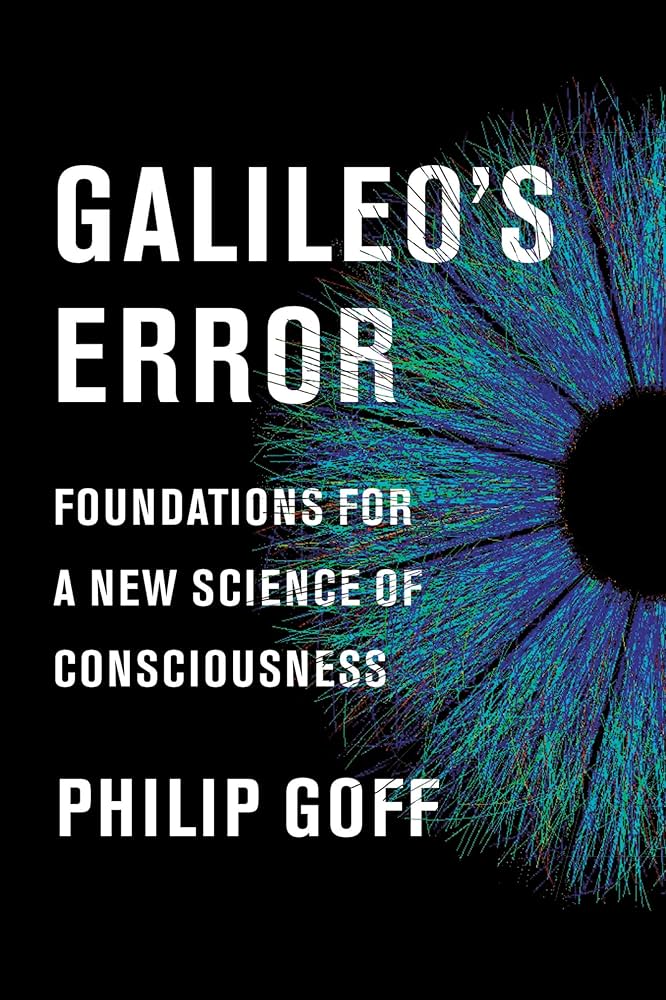
How does the brain produce consciousness? Why should electrical and chemical activity in the brain give rise to thoughts, emotions, colors, sounds, and the feeling of being alive? Despite major advances in neuroscience, the inner nature of experience remains difficult to explain. Modern science can describe the brain’s physical processes in great detail, but it still struggles to explain why those processes are accompanied by subjective awareness. The book “Galileo’s Error: Foundations for a New Science of Consciousness” by Professor Philip Goff takes this problem as its starting point. Goff argues that the difficulty may lie not simply in our lack of scientific knowledge, but in the way modern science has defined the physical world since Galileo. By separating matter from subjective experience, science became highly successful at explaining the measurable world, but left consciousness outside its basic picture of reality.

To address this, Goff introduces panpsychism: the idea that consciousness, in some very simple form, may be a fundamental feature of matter itself. The book aims to show why this view should be taken seriously and how it might offer a new path toward understanding the relationship between mind, matter, and the universe.

Philip Goff is a philosophy professor at Durham University, UK. He spends most of his time trying to work out the ultimate nature of reality. In this episode of Bridging the Gaps, I speak with Professor Philip Goff.

Our discussion begins with Philip Goff’s central claim in Galileo’s Error: that the scientific paradigm developed over the past five hundred years was designed, from the time of Galileo, to exclude consciousness from its picture of the physical world. We explore what this means, why Goff regards this exclusion as a mistake, and how it shaped the modern scientific worldview.

From there, the conversation examines how this Galilean paradigm differed from earlier ways of understanding nature, and how it contributed to a materialist view of consciousness: the idea that consciousness is simply an emergent product of physical processes in the brain. We consider what may be missing from this account and why it struggles to address the so-called “hard problem of consciousness”—the question of why and how physical processes give rise to subjective experience.

The discussion then turns to the contrast between the mathematical description of the world provided by science and the rich inner life of conscious beings. We consider Goff’s argument that science gives us an incomplete picture of reality because it describes matter from the outside while leaving out its intrinsic nature. This leads to the possibility that the hidden, intrinsic nature of matter may help explain human and animal consciousness.

A central part of the conversation focuses on panpsychism, the view that mind or consciousness is a fundamental feature of the world and may exist, in some basic form, throughout the universe. We explore what this means, whether it implies that the universe itself is conscious, and how this approach reframes the hard problem of consciousness. Finally, the discussion considers deeper questions about the fundamental nature of reality, including whether information may lie at its foundation, before concluding with reflections on the provocative title of the book, Galileo’s Error.

Complement this discussion by listening to From Consciousness to Synthetic Consciousness: From One Unknown to Another Unknown with David Chalmers followed by “The Case Against Reality” and The Hard Problem of Consciousness with Professor Donald Hoffman and Why You Are Not Your Brain? A Conversation on Consciousness with Alva Noe, Ph.D..
By |June 20th, 2026|Philosophy|

“Somebody Should Do Something: How Anyone Can Help Create Social Change” with Professor Alex Madva

Achieving meaningful and sustainable social change is a complex task and a demanding challenge. Many of the most urgent problems, such as climate change, racism, and poverty are structural. They arise from collective practices, including laws, economies, history, culture and social norms. Yet structural change still depends on individuals making different choices—choices that confront existing structures and challenge established norms.

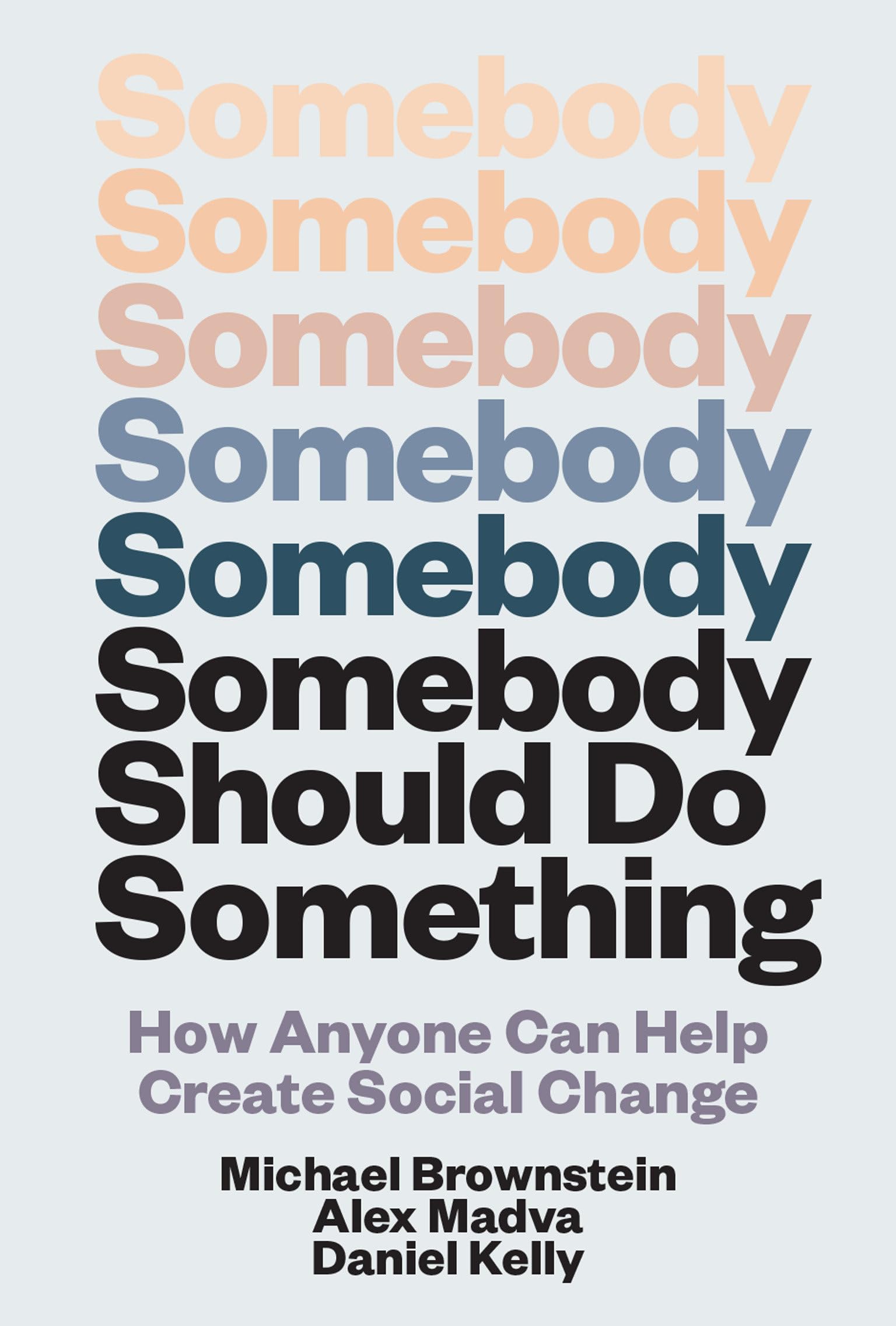
In their recent book “Somebody Should Do Something: How Anyone Can Help Create Social Change” Michael Brownstein, Alex Madva, and Daniel Kelly present a novel and scientific account of how personal choices can contribute to transformative social change. The authors argue that individual action matters most when it connects people to collective efforts. Meaningful change happens when individuals work with others to challenge and reshape existing structures. In this episode of Bridging the Gaps I speak with Professor Alex Madva.

Alex Madva is Professor of Philosophy, Director of the California Center for Ethics and Policy, and Co-Director of the Digital Humanities Consortium at Cal Poly Pomona.

We begin our discussion by unpacking a key point made in the book: many people feel trapped in “either/or thinking” about personal choices and structural change, as though they must choose between the two. The authors describe the book as a way to help readers “get unstuck,” and we explore what this means in practice.

We then examine the book’s two central themes: the climate crisis and racism. We discuss why the authors focus on these issues rather than others. We also discuss the book’s writing style, including its use of humour, and consider the value of humour when addressing serious and complex topics.

The discussion then turns to pluralistic ignorance, particularly the problem of people not knowing how much others care about social issues. We examine this concept in depth. We also consider several real-world examples, including Chris Smalls’s unionization campaign at Amazon.

Finally, we discuss the differences between face-to-face and online activism. We reflect on whether activists should observe certain limits when their actions affect the daily lives of ordinary people. We also touch on research showing how small actions can create wider social effects, and how movements that appear to fail in the short term may still lay the groundwork for future victories.

Overall, this has been an enlightening discussion.

Complement this discussion with “The Painful Truth about Hunger in America” with Professor Mariana Chilton and then listen to “A Passion for Ignorance” and for Denials and Negations with Professor Renata Salecl.

By |May 27th, 2026|Philosophy, Podcasts, Research, Social Science|

“AI Fairness: Designing Equal Opportunity Algorithms” with Professor Derek Leben

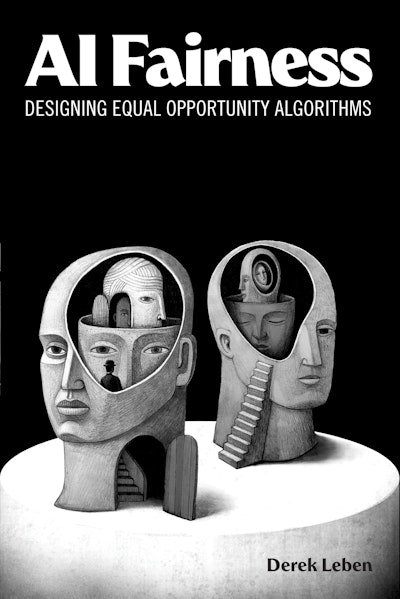
As artificial intelligence takes on a growing role in decisions about education, jobs, housing, loans, healthcare, and criminal justice, concerns about fairness have become urgent. Because AI systems are trained on data that reflect historical inequalities, they often reproduce or even amplify those disparities. In his book “AI Fairness: Designing Equal Opportunity Algorithms” Professor Derek Leben draws on classic philosophical theories of justice—especially John Rawls’s work—to propose a framework for evaluating the fairness of AI systems. This framework offers a way to think systematically about algorithmic justice: how automated decisions can align with ethical principles of equality and fairness. The book examines the trade-offs among competing fairness metrics and shows that it is often impossible to satisfy them all at once. As a result, organizations must decide which definitions of fairness to prioritize, and regulators must determine how existing laws should apply to AI. In this episode of Bridging the Gaps, I speak with Professor Derek Leben.

Derek Leben is Professor of Business Ethics at the Tepper School of Business at Carnegie Mellon University. As founder of the consulting group Ethical Algorithms, he has worked with governments and companies to develop policies on fairness and benefit for AI and autonomous systems.

I begin our discussion by asking Derek what “AI” means in the context of his work and how fairness fits into that picture. From there, we explore why fairness matters as AI systems increasingly influence critical decisions about employment, education, housing, loans, healthcare, and criminal justice.

We discuss how historical inequalities in training data lead to biased outcomes, giving listeners a deeper understanding of the problem. While some view AI fairness as a purely technical issue that engineers can fix, the book argues that it is also a moral and political challenge—one that requires insights from philosophy and ethics. We then examine the difficulty of balancing multiple fairness metrics, which often cannot all be satisfied simultaneously, and discuss how organizations might prioritize among them. Derek explains his theory of algorithmic justice, inspired by John Rawls’s philosophy, and we unpack its key ideas.

Later, we touch on questions of urgency versus long-term reform, exploring the idea of longtermism, and discuss the tension between fairness and accuracy. Finally, we consider how businesses can balance commercial goals with their broader social responsibilities.

Overall, it is an informative and thought-provoking conversation about how we can make AI systems more just.

Complement this discussion with “The Line: AI and the Future of Personhood” with Professor James Boyle and the listen to Reclaiming Human Intelligence and “How to Stay Smart in a Smart World” with Prof. Gerd Gigerenzer