
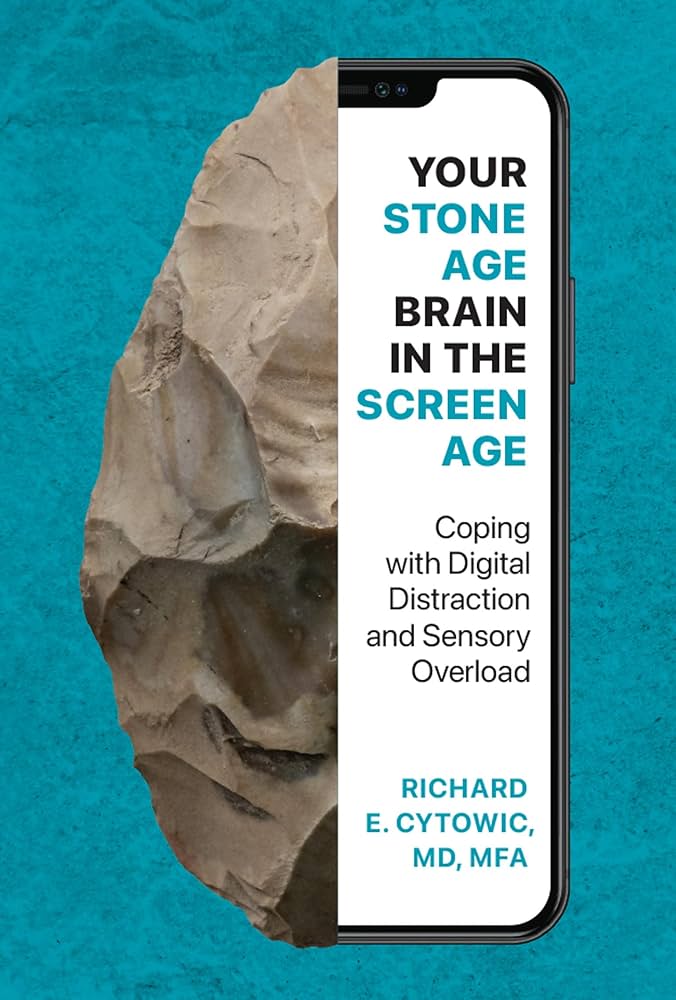
The human brain evolved for a prehistoric world, not for the demands of the digital age. Yet modern technologies constantly compete for our attention. They exploit ancient systems linked to reward, emotion, comparison, and survival. In his new book, “Your Stone Age Brain in the Screen Age”, Professor Richard Cytowic explores this conflict. He explains why the brain struggles to resist smartphones, social media, and other digital devices. He also examines why developing brains are particularly vulnerable and why periods of silence remain essential. In this episode of Bridging the Gaps, I speak with Professor Richard Cytowic.
Richard E. Cytowic, a pioneering researcher in synesthesia, is Professor of Neurology at George Washington University. He is best known for rediscovering synesthesia—the involuntary coupling of the senses—and returning it to mainstream science. He coauthored “Wednesday Is Indigo Blue” that won the Montaigne Medal.
I begin by asking Richard about the brain’s energy consumption, particularly in relation to attention, information overload, and digital distraction. We also compare the brain’s energy demands with those of other organs and bodily functions.
The book opens with a description of a typical day in the life of a Stone Age human. This leads us to consider a central question: how does an ancient brain function in a radically modern environment? We discuss how people respond to new technologies and why innovations are often adopted so quickly.
The conversation then turns to digital distraction. Richard explains what happens when the brain repeatedly shifts attention and why true multitasking is difficult. We also examine the effects of blue light, the pursuit of happiness through digital devices, and the growing influence of the attention economy.
A particularly striking part of the discussion concerns “virtual autism.” We explore whether excessive screen use and reduced social interaction can produce behaviours that resemble signs associated with autism. We also discuss the idea of engineered addiction and ask whether digital detoxes are genuinely effective.
The discussion then considers possible solutions. These include spending more time in nature, engaging directly with other people, reducing reliance on digital devices, and creating space for silence and reflection. We examine why solitude and quiet may be essential for mental balance.
Finally, Richard explains synaesthesia and how it reveals the brain’s remarkable ability to connect different sensory experiences. Overall, the conversation offers an insightful exploration of attention, technology, behaviour, and the continuing influence of our evolutionary past.
Complement this discussion with “On Task: How Our Brain Gets Things Done” with Professor David Badre and the listen to “Zero to Birth: How the Human Brain Is Built” with Professor William Harris.

Connect With Us