
“The Exquisite Machine: The New Science of the Heart” with Professor Sian Harding
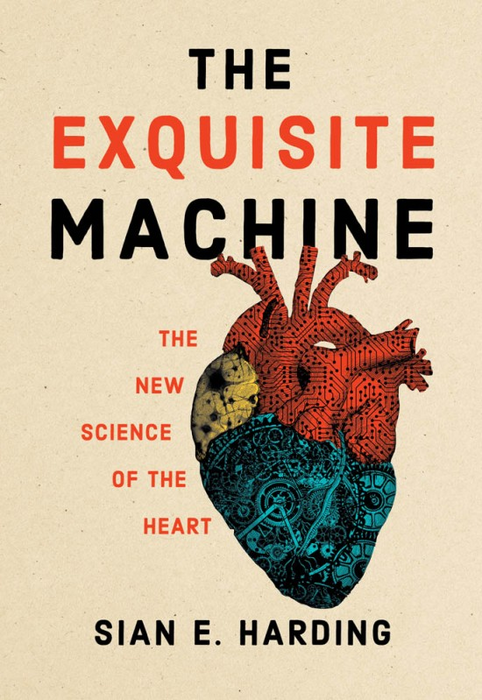
The Exquisite Machine on Bridging the Gaps

The heartbeat may be the first physical manifestation of an unborn child that can be seen six weeks after conception, and it continues roughly 100,000 times per day for as long as we are alive. Scientists and researchers have attempted to recreate the heart’s flawless engineering for decades in labs all around the world, but have been unsuccessful. Its exact operation and capacity to meet both our bodily and emotional demands makes it a marvel of engineering that is unmatched by anything built by humans. Any damage to this vital organ of the human body could result in problems that are potentially fatal.

In this episode of Bridging the Gaps I speak with professor Sian Harding about new scientific developments that are opening up the mysteries of the heart, as outlined in her new book “The Exquisite Machine: The New Science of the Heart”. We discuss cutting-edge technologies such as stem cells, gene editing, artificial intelligence and big data that have crucial real-world consequences for health and well-being.These technologies are enabling experiments and clinical trials that will lead to the development of new treatments for heart diseases.

Professor Sian Harding is a leading authority in cardiac science, and emeritus professor of cardiac pharmacology in Imperial College London. She was special advisor to the House of Commons Science and Technology Select Committee on Regenerative Medicine, and has been awarded the Imperial College Medal and a lifetime achievement award from the European Society of Cardiology.

We start off with a detailed discussion of how our present day understanding of the functioning of the human heart developed. We then discuss the cutting edge research on cardiac stem cells, touching upon the experiments where a small number of beating cells were created in the labs. The application of Artificial Intelligence and Big Data Analytics are playing an important role in the field of cardiac research; we go through these topics in detail. Plasticity is a concept that we associate with the brain and its ability to rewire itself to manage any damage or other changes; We discuss the term plastic brain that Sian Harding uses in the book while explaining the resilience of our heart. We then discuss the nervous system that ensures that the heart responds to changing needs. We look into the relation between the emotions and functioning of the heart, discussing that the heart not only responds to our emotions but creates emotions as well. And finally we touch upon the importance of keeping “gender” in mind when developing and implementing solutions for heart related diseases and problems. This has been a highly informative discussion.

Complement this discussion with “Zero to Birth: How the Human Brain Is Built” with Professor William Harris and then listen to “The Next 500 Years: Engineering Life to Reach New Worlds” with Professor Christopher Mason
By |December 1st, 2022|Artificial Intelligence, Biology, Podcasts, Research, Technology|

Augmented Thinking: The New Convergence of Art, Technology, and Science with Professor Julio Ottino

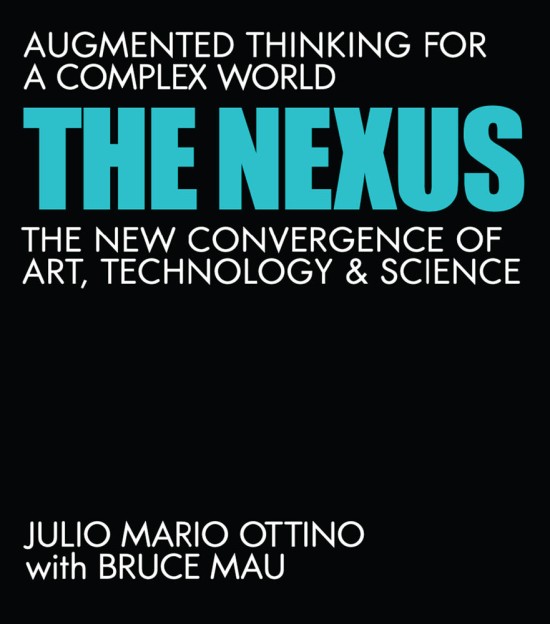
We live in an age of increasing complexity and uncertainty. We live in a time when humanity faces extremely complex challenges. Our ability, or lack thereof, to create solutions to such extremely complicated challenges may determine our long-term survival as a civilization. The question is: is our existing style of thinking adequate, or do we require a new style of thinking in order to innovate and lead into the future. In their recent book Julio Ottino and Bruce Mau make a case for “The Nexus”, a radically new way of thinking — one in which art, technology, and science converge to expand our creativity and augment our insight. In this episode or Bridging the Gaps I speak with Julio Ottino who explains “the Nexus” and guides us how to embrace the powerful idea of complementarity, where opposing extremes coexist. We discuss how blurring the lines between the three major realms of human creation — art, technology, and science — results in a significant expansion of thinking spaces and a richness of potential ideas.

Julio Ottino is Dean of Engineering and Applied Sciences, and a professor of Chemical and Biological Engineering at Northwestern University, in Illinois. He is also the founding co-director of Northwestern University’s Institute on Complex Systems. He is a thought leader, author, artist, and internationally recognized researcher in chaos theory and complex systems whose work has been featured in “Nature”, “Science”, and “Scientific American”.

We begin our discussion by looking back at the time before the divergence of disciplines and how key figures in science immensely benefited from talents and skills in a variety of fields. Then we talk about how, when, and why the disciplines diverged. We delve into the concept of “the Nexus” and discuss whole-brain thinking. The book is jam-packed with wonderful photographs and diagrams. I ask Professor Ottino to describe the process that he followed to write this book. This has been a wonderful discussion.

Complement this discussion with Asking Better Questions for Creative Problem Solving, Innovation and Effective Leadership with Hal Gregersen and with “Learning How to Learn”: Techniques to Help You Learn with Dr Barbra Oakley and then listen to Multiple Intelligences, Future Minds and Educating The App Generation: A discussion with Dr Howard Gardner

By |June 27th, 2022|Knowledge, Podcasts, Research, Technology|

“The Joy of Science” with Professor Jim Al-Khalili

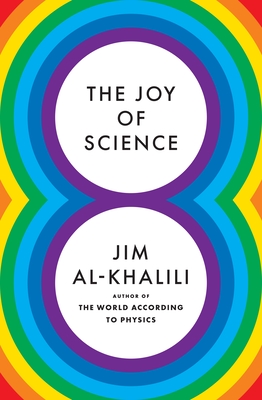
Can living scientifically empower us to navigate the complexities of today’s complex and unpredictable world? Can the joy of critical thinking and the effectiveness of the scientific method assist us in making better decisions? Can living a more rational life help us navigate modern life more confidently? In his new book “The Joy of Science” acclaimed physicist Jim Al-Khalili invites readers to engage with the world as scientists have been trained to do. He shows how the fundamental principles at the heart of scientific thinking, as well as the scientific process, are profoundly relevant to the perplexing times we live in and the tough choices we make. In this episode of Bridging the Gaps, I speak with professor Jim Al-Khalili and we thoroughly discuss very interesting and deeply intriguing ideas that he presents in this book.

Professor Jim Al-Khalili is a theoretical physicist at the University of Surrey where he holds a Distinguished Chair in physics as well as a university chair in the public engagement in science. He is a prominent author, broadcaster and one of Britain’s best-known science communicators.

I start our discussion with the question that how the discipline of science should be perceived. We acknowledge that there are many ways scientific work is carried out in many different disciplines. We discuss the issue of “relative truth” and how biases held by individuals impact their opinions and distort their view and lead them to their own version of truth. We explore how science deals with the issue of relative truth. We probe how the scientific method enables us to continue researching in the presence of uncertainty. We investigate the impact of misinformation and disinformation on the disciple and cause of science. We also touch upon how rational humans can become; can we think rationally only up to certain point. We discuss in detail how scientific information should be presented to policy makers that should enable and empower them to make better decisions and to make the right choices. Finally, I ask Professor Jim Al-Khalili to tell us about his research in the field of open quantum systems. This has been a fantastic discussion.

Complement this with Asking Better Questions for Creative Problem Solving, Innovation and Effective Leadership with Hal Gregersen and then listen to On Public Communication of Science and Technology with Professor Bruce Lewenstein

By |May 13th, 2022|Biology, Future, Information, Knowledge, Physics, Podcasts, Research, Technology|