
“Everything Evolves” and the Generalised Evolutionary Theory with Professor Mark Vellend
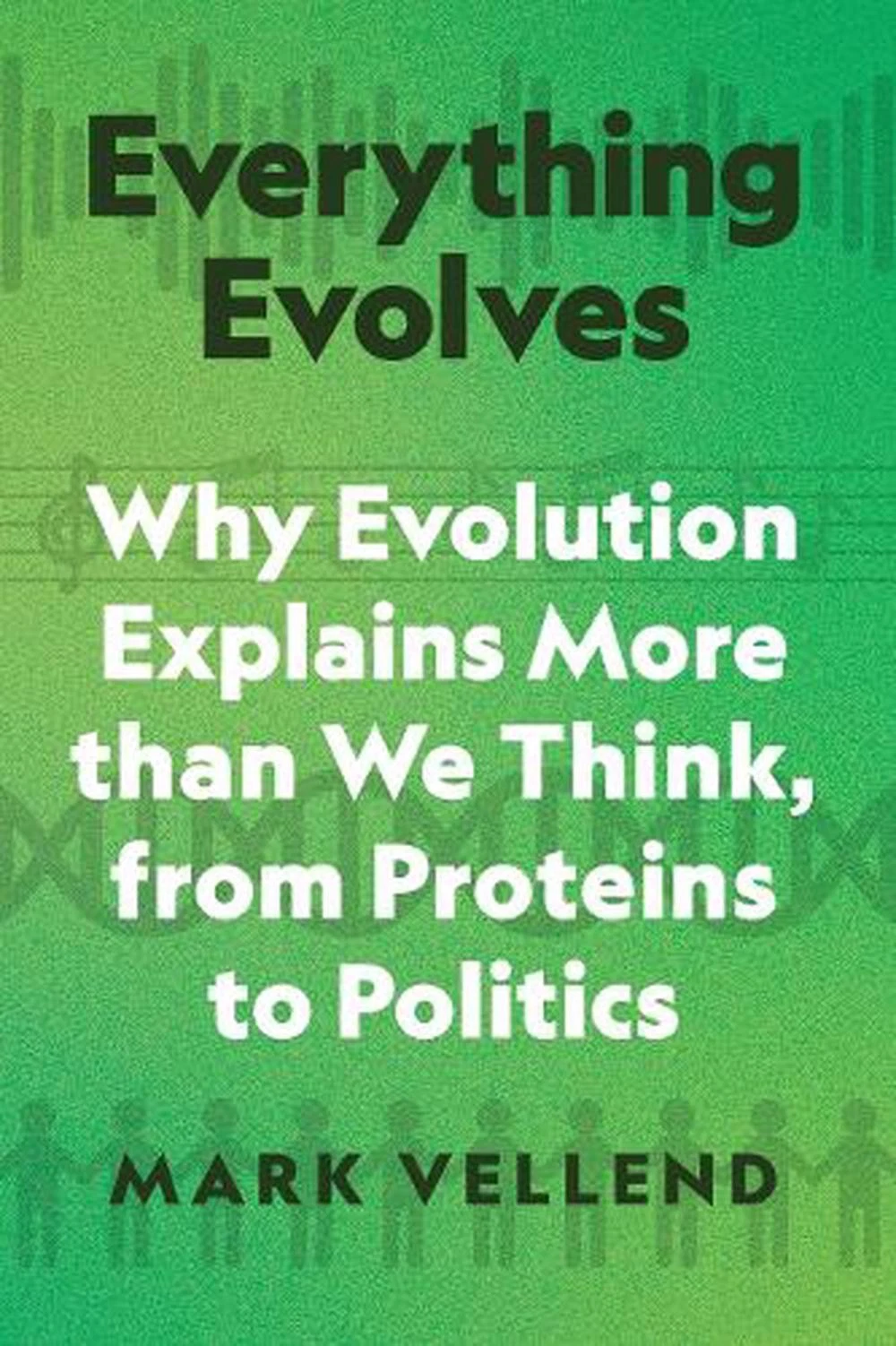
The idea that evolutionary theory applies far beyond biology is not new. Yet one major obstacle to the broader acceptance of a generalized evolutionary theory is our tendency to begin with biology and extend outward from it. This approach obscures an important historical fact. Long before scientists developed theories to explain the evolution of life, scholars in fields such as linguistics, economics, and technology had already proposed ideas about change that were evolutionary in the modern sense.

The evolutionary biologist Stephen Jay Gould even suggested that “Darwin may have cribbed the idea of natural selection from economics.” Beginning with biology can create the misleading impression that evolutionary processes in areas such as language, technology, or economics are weaker or derivative forms of evolution. In reality, evolutionary processes are largely independent of the substrate on which they operate. They generate diverse outcomes—organisms, technologies, and cultural practices—that are well adapted to particular functions.

In his book Everything Evolves: Why Evolution Explains More than We Think, from Proteins to Politics, Professor Mark Vellend shows how evolutionary dynamics shape many aspects of the world around us. He also explores how evolutionary principles are being applied to practical challenges, from increasing the global food supply to developing artificial intelligence systems that can evolve solutions to complex problems.

In this episode of Bridging the Gaps, I speak with Professor Mark Vellend.

Mark Vellend is a professor of biology at Université de Sherbrooke and a Fellow of the Royal Society of Canada.

We begin our discussion with an intriguing idea from the book: reality can be understood through two broad sciences. The first is physics. The second is the science of evolvable systems. We explore this distinction in detail.

We then turn to the concept of generalized evolutionary theory and discuss why it is important to communicate this broader framework to a wider audience. In this context, we also touch on the argument that the strong emphasis on Darwin can sometimes be a distraction from the larger evolutionary perspective.

Next, we examine several examples that illustrate how generalized evolutionary processes allow different artifacts and systems to evolve over time. We then discuss a framework presented in the book that explains how generalized evolution operates. This framework is described using the metaphor of a soundboard, where each knob represents a distinct variable in the evolutionary process. We explore this “Evolutionary Soundboard” in detail.

Our conversation then turns to the role of randomness and the ways systems can improve over time through deliberate design. We also discuss the importance of diversity, which enables and sustains evolutionary processes.

Overall, the discussion is both engaging and informative, raising a number of thought-provoking ideas.

Complement this discussion with “The Evolution of Biological Information: How Evolution Creates Complexity, from Viruses to Brains” with Professor Christoph Adami and then listen to “The Network of Life: A New View of Evolution” with Professor David Mindell.
By |March 15th, 2026|Biology, Knowledge, Research, Technology|

Building a Thriving Future: Navigating the Metaverse and Multiverse with Dr Paola Cecchi-Dimeglio

The metaverse is no longer a distant concept. It is unfolding now, driven by advances in artificial intelligence, big data, and immersive digital technologies. As it reshapes how we work, interact, and create value, it presents significant opportunities alongside growing competitive pressures. In the book “Building a Thriving Future: Navigating the Metaverse and Multiverse” Harvard researcher and AI strategist Dr. Paola Cecchi-Dimeglio provides the first strategy-focused guide designed for business leaders, policymakers, and decision-makers navigating this transformation. The book emphasizes that the metaverse is not simply about virtual environments. It represents a broader transformation of business, governance, and global markets. Organizations that combine AI, behavioral insights, and digital strategy will be the ones that define the future. In this episode of Bridging the Gaps I speak with Dr. Paola Cecchi-Dimeglio.

Dr Paola Cecchi-Dimeglio is an expert on AI and Big Data, Behavioral Science and Future of work. She holds dual appointments at Harvard Law School and the Kennedy School of Government, where she chairs the Executive Leadership Research Initiative for Women and Minority Attorneys (ELRIWMA). She is also a vice chair for the Global Initiative on Virtual Worlds and AI and leads Sustainability for AI, Big Data, and Metaverse regulation at the UN’s International Telecommunication Union. She is the CEO of People Culture Data Consulting Group.

We begin by acknowledging that virtual worlds are not a new concept. What is new, however, is the rapid advancement of hardware, big data, and AI, which is making the metaverse far more powerful and practical. We then examine why the metaverse should be understood as a critical development for business and organizational strategy. It is not just a technological trend, but a structural shift in how value is created and managed. We also explore how technologies such as blockchain can strengthen digital ownership and enable more secure, efficient trading within virtual environments. An important point we address is that, when developing business solutions for virtual worlds, organizations must give careful attention to diversity, inclusion, and equal access. Overall, the conversation offers a clear and insightful look at the strategic implications of the metaverse.

Complement this discussion with “From Pessimism to Promise: Lessons from the Global South on Designing Inclusive Tech” with Professor Payal Arora and then listen to “The Line: AI and the Future of Personhood” with Professor James Boyle.

By |February 17th, 2026|Computer Science, Future, Technology|

“Middle Tech: Software Work and the Culture of Good Enough” with Professor Paula Bialski

Middle Tech on Bridging the Gaps

Contrary to the widespread belief that all technology is sleek, flawless, and cutting-edge, much of it isn’t designed to meet such high standards or be revolutionary. In many environments, the goal isn’t always to create perfect, futuristic products. Instead, the focus is often on functionality—producing tech that is good enough to meet immediate needs without striving for perfection. This mindset contrasts with the image of the tech world as a space of constant innovation, where every new development is expected to disrupt industries and change lives. Instead, in many cases, the aim is to simply keep things running smoothly, making sure the technology works well enough to get by, while knowing that it will likely be improved or replaced in the next version. In her book “Middle Tech: Software Work and the Culture of Good Enough” Professor Paula Bialski explores this idea through an ethnographic study of software developers working at a corporate tech company. In this episode of Bridging the Gaps, I speak with Professor Paula Bialski.

Paula Bialski is associate professor of digital sociology at the University of St. Gallen in St. Gallen, Switzerland.

We begin our discussion by exploring why Paula chose to conduct her study at a mid-sized software development company, rather than focusing on the world’s top tech firms with their sleek offices and cutting-edge facilities. This choice allowed her to investigate a more grounded and realistic aspect of the tech industry. From there, we dive into how she conducted her research—how she embedded herself with the developers and built rapport to understand their day-to-day work and culture.

A major focus of our conversation is the concept of “good enoughness” in corporate software development. Paula explains how this mindset shapes the way tech workers approach their tasks, balancing functionality and time constraints over perfection. I ask her if “good enough” can sometimes become a way to avoid striving for excellence, or even an excuse for sloppiness, which leads us to a broader conversation about how developers navigate this balance.

We also discuss the challenges software engineers face at work, such as dealing with outdated systems, tight deadlines, and corporate expectations, and how these challenges compare to those in other professions. We also touch upon the challenges they face in their personal space. Paula gives insight into how the fast-paced culture of the tech world, where professionals often move quickly from one job to the next, influences the work environment.

Finally, we briefly touch on Paula’s upcoming project, which will examine the impact of AI on software development—a topic that promises to provide new insights into how technology will continue to shape this field. It has been a fascinating conversation that sheds light on a side of the tech industry not often discussed.

Complement this discussion with “The AI Playbook: Mastering the Rare Art of Machine Learning Deployment” with Eric Siegel. And then listen to Augmented Thinking: The New Convergence of Art, Technology, and Science with Professor Julio Ottino

By |October 6th, 2024|Computer Science, Social Science, Technology|