
“Everything Evolves” and the Generalised Evolutionary Theory with Professor Mark Vellend
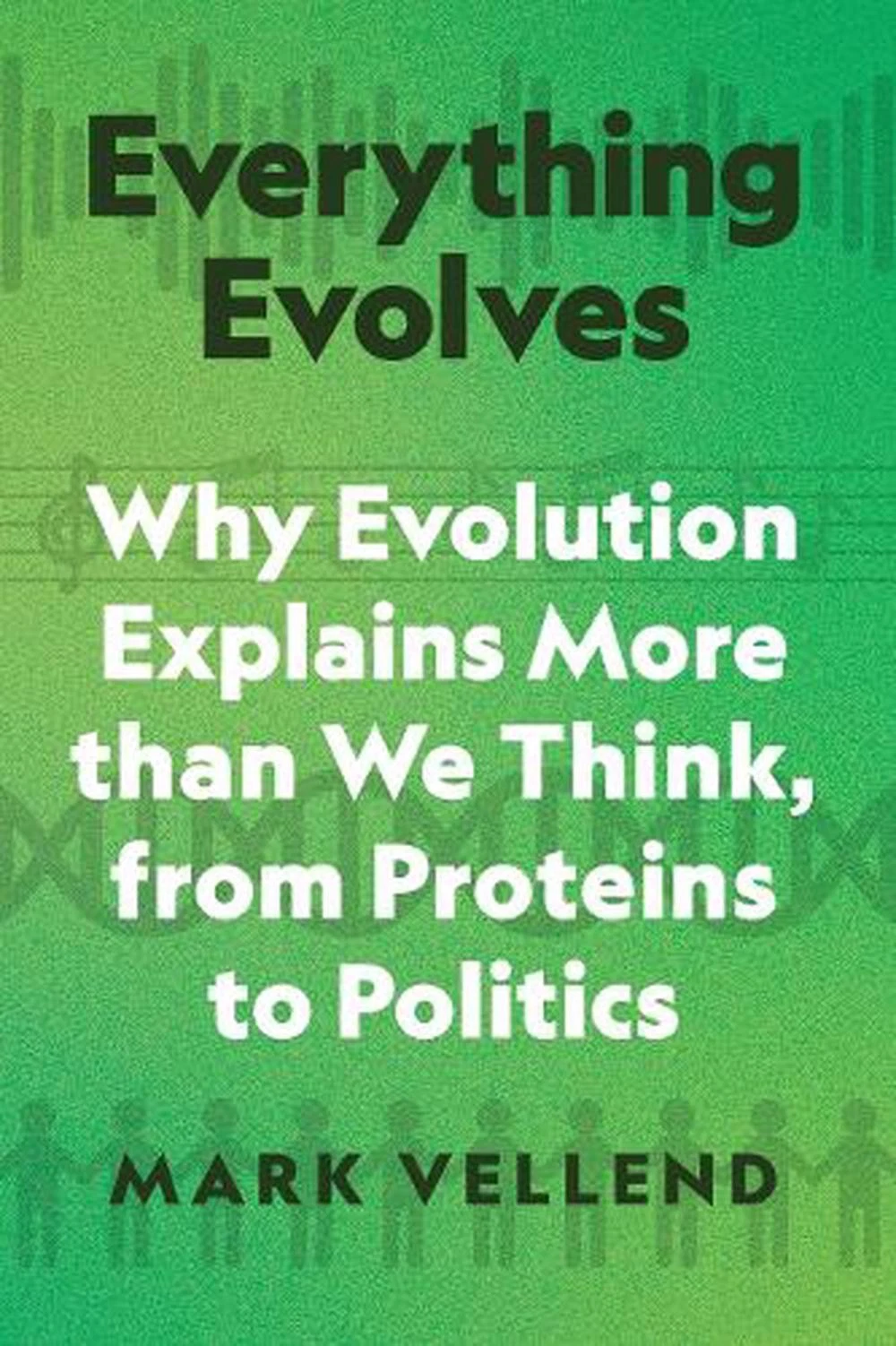
The idea that evolutionary theory applies far beyond biology is not new. Yet one major obstacle to the broader acceptance of a generalized evolutionary theory is our tendency to begin with biology and extend outward from it. This approach obscures an important historical fact. Long before scientists developed theories to explain the evolution of life, scholars in fields such as linguistics, economics, and technology had already proposed ideas about change that were evolutionary in the modern sense.

The evolutionary biologist Stephen Jay Gould even suggested that “Darwin may have cribbed the idea of natural selection from economics.” Beginning with biology can create the misleading impression that evolutionary processes in areas such as language, technology, or economics are weaker or derivative forms of evolution. In reality, evolutionary processes are largely independent of the substrate on which they operate. They generate diverse outcomes—organisms, technologies, and cultural practices—that are well adapted to particular functions.

In his book Everything Evolves: Why Evolution Explains More than We Think, from Proteins to Politics, Professor Mark Vellend shows how evolutionary dynamics shape many aspects of the world around us. He also explores how evolutionary principles are being applied to practical challenges, from increasing the global food supply to developing artificial intelligence systems that can evolve solutions to complex problems.

In this episode of Bridging the Gaps, I speak with Professor Mark Vellend.

Mark Vellend is a professor of biology at Université de Sherbrooke and a Fellow of the Royal Society of Canada.

We begin our discussion with an intriguing idea from the book: reality can be understood through two broad sciences. The first is physics. The second is the science of evolvable systems. We explore this distinction in detail.

We then turn to the concept of generalized evolutionary theory and discuss why it is important to communicate this broader framework to a wider audience. In this context, we also touch on the argument that the strong emphasis on Darwin can sometimes be a distraction from the larger evolutionary perspective.

Next, we examine several examples that illustrate how generalized evolutionary processes allow different artifacts and systems to evolve over time. We then discuss a framework presented in the book that explains how generalized evolution operates. This framework is described using the metaphor of a soundboard, where each knob represents a distinct variable in the evolutionary process. We explore this “Evolutionary Soundboard” in detail.

Our conversation then turns to the role of randomness and the ways systems can improve over time through deliberate design. We also discuss the importance of diversity, which enables and sustains evolutionary processes.

Overall, the discussion is both engaging and informative, raising a number of thought-provoking ideas.

Complement this discussion with “The Evolution of Biological Information: How Evolution Creates Complexity, from Viruses to Brains” with Professor Christoph Adami and then listen to “The Network of Life: A New View of Evolution” with Professor David Mindell.
By |March 15th, 2026|Biology, Knowledge, Research, Technology|

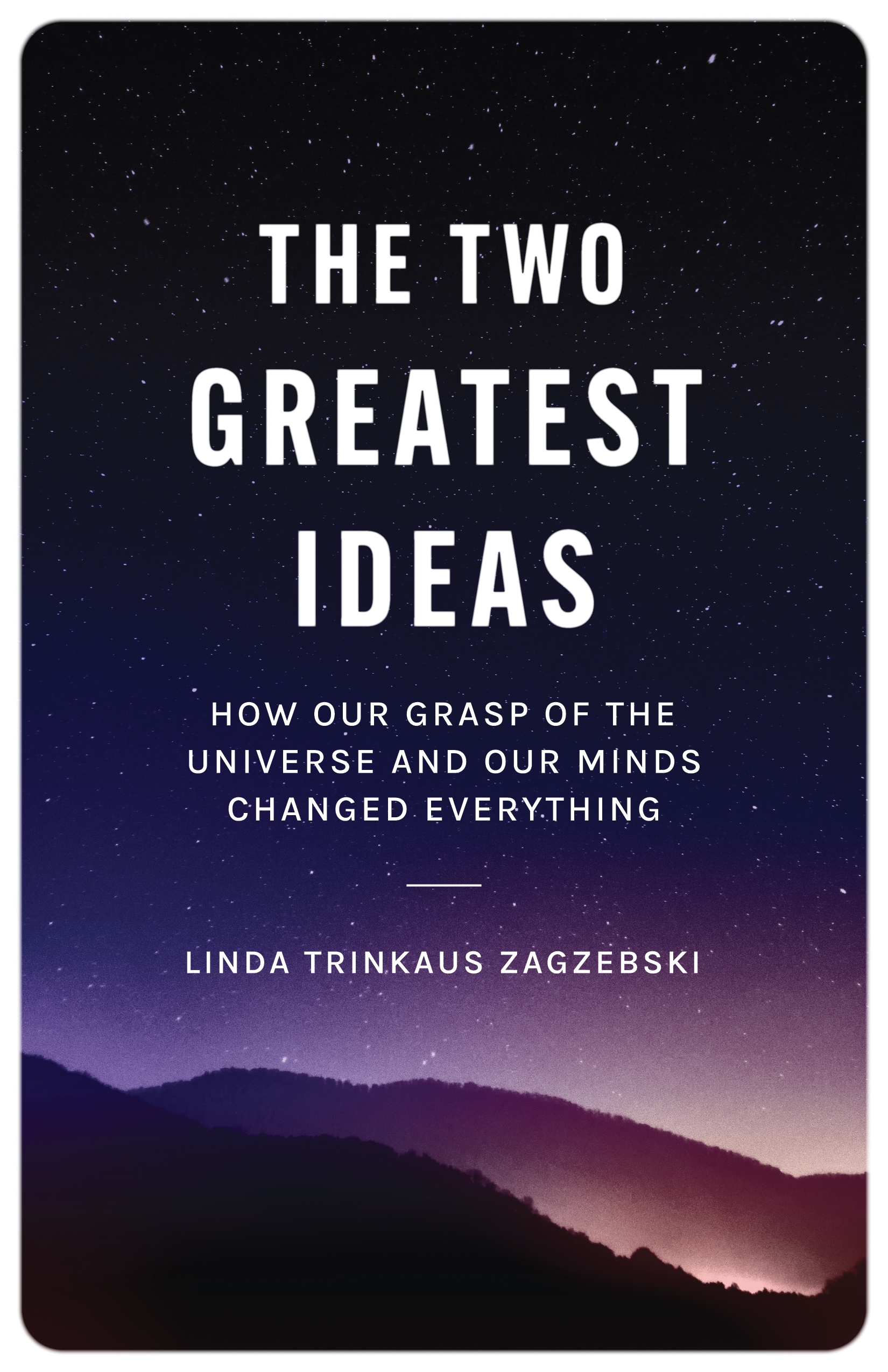
“The Two Greatest Ideas: How Our Grasp of the Universe and Our Minds Changed Everything” with Professor Linda Zagzebski

At the heart of the intellectual and cultural awakening that swept across the globe during the first millennium BCE—an era that witnessed the emergence of philosophy, mathematics, science, and nearly all of the world’s major religions—lies a transformative conviction: the human mind is capable of comprehending the universe. Equally profound is the parallel insight that the mind is capable of reflecting upon and understanding itself.

In her book “The Two Greatest Ideas: How Our Grasp of the Universe and Our Minds Changed Everything” Professor Linda Zagzebski offers a compelling examination of these two foundational ideas in human history. She traces how their dynamic interplay has generated enduring tensions, leaving humanity divided in its understanding of the relationship between consciousness and the cosmos. The book argues that these tensions have long shaped debates over how society should be organized—whether in harmony with the natural order or in pursuit of individual autonomy—and they continue to underlie conflicts on issues such as abortion, the environment, free speech, and identity. The book further envisions the rise of a third transformative idea: that human minds can genuinely understand one another, opening the possibility of grasping reality in its entirety. In this episode of Bridging the Gaps, I speak with Professor Linda Zagzebski.

Linda Zagzebski is Professor Emerita and the Kingfisher College Chair of the Philosophy of Religion and Ethics Emerita at the University of Oklahoma.

We begin our discussion by examining the two central ideas highlighted in Zagzebski’s book: first, that the human mind can grasp the universe, and second, that it can grasp itself. While these notions feel ever-present in contemporary thought, it is easy to forget that they emerged gradually in human history. We consider their significance and origins, tracing early expressions of these ideas in mathematics, astronomy, art, and philosophy. This includes reflections on ancient conceptions of a unified reality governed by a single principle, exemplified in Pythagorean thought, which envisioned the cosmos as bound together by number—a view that continues to echo in Western intellectual traditions. We discuss the discovery of subjectivity and its impact on art and science.

Our conversation then turns to Zagzebski’s proposal of a possible third great idea: that the human mind can grasp another mind. From there, we reflect on enduring questions: Can we ever fully understand the nature of reality? What drives the uniquely human impulse to seek knowledge of the whole? Finally, we delve into the book’s exploration of the concept of self and consider why our curiosity about reality sets us apart from other animals.Overall, this has been an illuminating and thought-provoking discussion.

Complement this discussion with Robots, Artificial Life and Technology Imagined by the Ancients with Adrienne Mayor and then listen to “The Human Journey From Ape to Agriculture” with Professor Peter Bellwood.

By |September 14th, 2025|History, Knowledge, Philosophy, Social Science|

“The Human Journey From Ape to Agriculture” with Professor Peter Bellwood

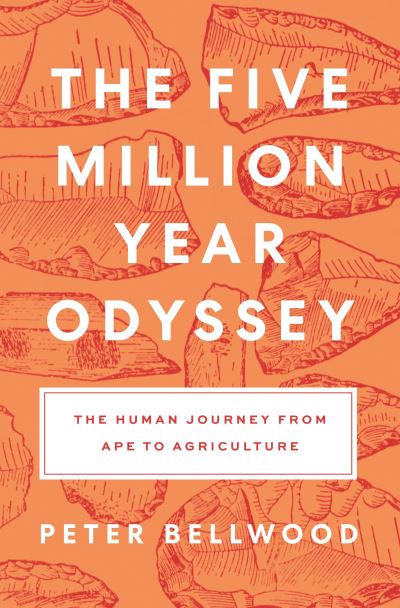
Over a span of five million years, humankind rose from modest origins to become the planet’s most dominant species. Along the way, people changed a lot in how they looked, spoke, and lived. But how did all this happen? The variety we see in humans today is the result of evolution—which began shaping the Homo group about 2.5 million years ago—and migration, as humans moved into new places. In his book “The Five-Million-Year Odyssey: The Human Journey from Ape to Agriculture” Professor Peter Bellwood brings together research from archaeology, biology, anthropology, and language studies to tell the story of human history. He takes us from the earliest hominins in Africa, through the spread of humans across the continents, to the start of farming and rapid population growth. He introduces early human relatives like the australopithecines, Homo erectus, and Neanderthals, then focuses on the rise of Homo sapiens about 300,000 years ago and their journey into Eurasia, Australia, and the Americas. Bellwood also looks at how farming, which began around 10,000 years ago, helped people move to new lands and share their languages and cultures. In this episode of Bridging the Gaps, I speak with Professor Peter Bellwood.

Peter Bellwood is professor emeritus at the Australian National University. He specialises in the human population prehistory from archaeological, linguistic and biological perspectives. His many books include “First Migrants: Ancient Migration in Global Perspective” and “First Farmers: The Origins of Agricultural Societies. He is the winner of the 2021 International Cosmos Prize.

We begin by discussing how studying languages uncovers our past and tells the story of humans. Language families act like maps, pointing to early journeys of people. Shared words that appear in many tongues offer strong clues about those first moves. Next we look at what ancient DNA and proteins can say about our past. I first ask about the hard job of finding and testing old genetic samples. After that we turn to classic archaeology, and I ask Peter about digging at historic sites. We dive into how a creature unlike any other animal arose, and we touch upon the blank spots that still puzzle us. The book’s idea of “man the tool maker” comes up: does making tools really set us apart? We talk about that in depth.

We then explore the rise and later disappearance of Neanderthals and other early human groups. Our focus shifts to the cultural growth of Homo sapiens, tracing the path from hunting and gathering to more organised farming. We look closely at the first waves of people who moved in search of richer soil and safer homes. The Fertile Crescent in the Middle East gets special attention, as we track the birth of stable villages and maybe the first cities. We also discuss the boats, paths, and simple gear that helped early travellers to travel long distances.

Shifting dates and fresh finds force us to keep revising the human timeline. We talk about lively cultures that either vanished overnight or slowly faded away. From start to end, the talk has been rich, clear, and full of insights.

Complement this discussion with How Cooking Made Us Human with Professor Richard Wrangham and then listen to “From Sensing to Sentience: How Feeling Emerges from the Brain” with Professor Todd Feinberg

By |June 21st, 2025|History, Knowledge, Podcasts, Research|