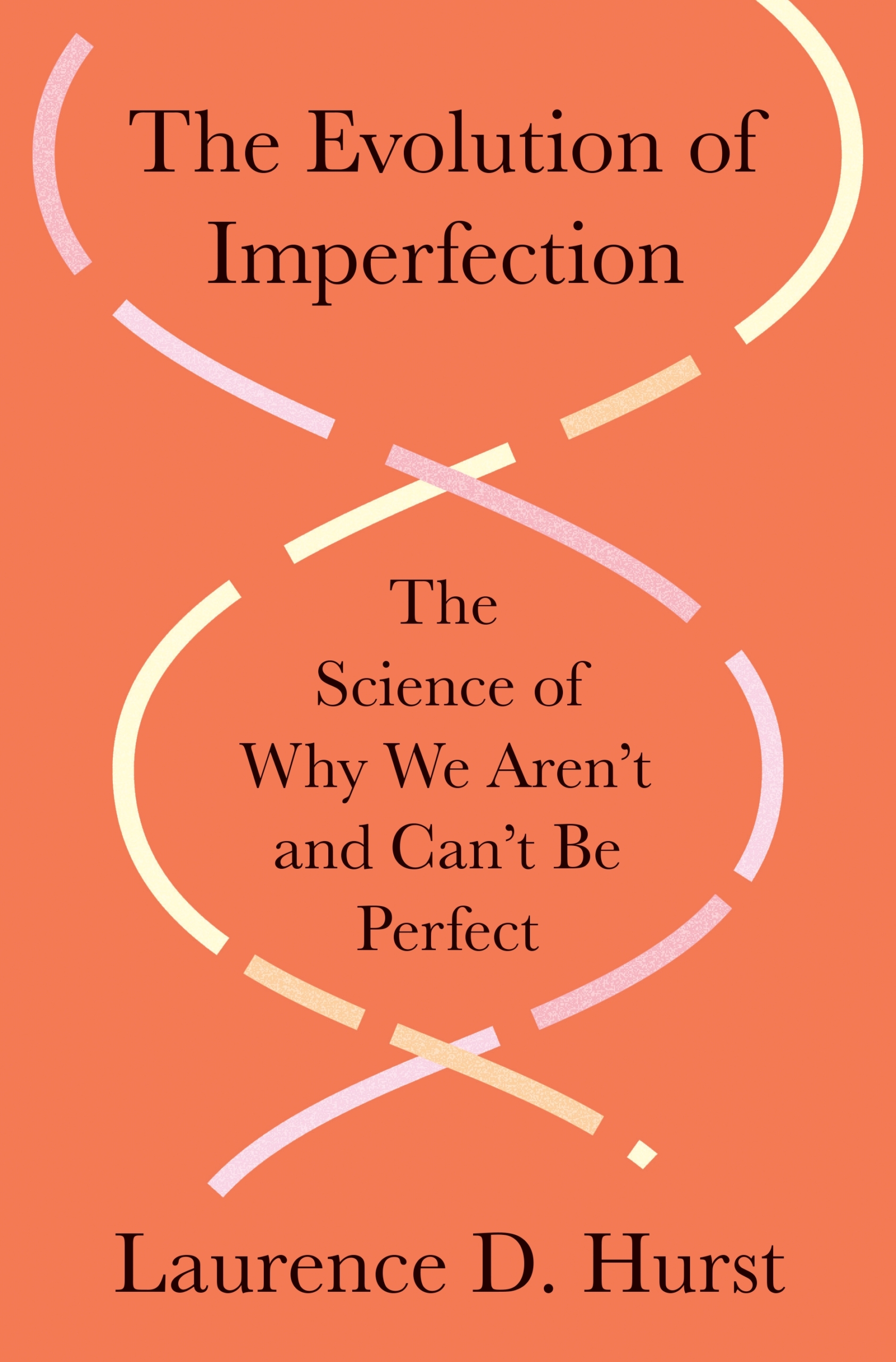
“Everything Evolves” and the Generalised Evolutionary Theory with Professor Mark Vellend

The idea that evolutionary theory applies far beyond biology is not new. Yet one major obstacle to the broader acceptance of a generalized evolutionary theory is our tendency to begin with biology and extend outward from it. This approach obscures an important historical fact. Long before scientists developed theories to explain the evolution of life, scholars in fields such as linguistics, economics, and technology had already proposed ideas about change that were evolutionary in the modern sense.

The evolutionary biologist Stephen Jay Gould even suggested that “Darwin may have cribbed the idea of natural selection from economics.” Beginning with biology can create the misleading impression that evolutionary processes in areas such as language, technology, or economics are weaker or derivative forms of evolution. In reality, evolutionary processes are largely independent of the substrate on which they operate. They generate diverse outcomes—organisms, technologies, and cultural practices—that are well adapted to particular functions.

In his book Everything Evolves: Why Evolution Explains More than We Think, from Proteins to Politics, Professor Mark Vellend shows how evolutionary dynamics shape many aspects of the world around us. He also explores how evolutionary principles are being applied to practical challenges, from increasing the global food supply to developing artificial intelligence systems that can evolve solutions to complex problems.

In this episode of Bridging the Gaps, I speak with Professor Mark Vellend.

Mark Vellend is a professor of biology at Université de Sherbrooke and a Fellow of the Royal Society of Canada.

We begin our discussion with an intriguing idea from the book: reality can be understood through two broad sciences. The first is physics. The second is the science of evolvable systems. We explore this distinction in detail.

We then turn to the concept of generalized evolutionary theory and discuss why it is important to communicate this broader framework to a wider audience. In this context, we also touch on the argument that the strong emphasis on Darwin can sometimes be a distraction from the larger evolutionary perspective.

Next, we examine several examples that illustrate how generalized evolutionary processes allow different artifacts and systems to evolve over time. We then discuss a framework presented in the book that explains how generalized evolution operates. This framework is described using the metaphor of a soundboard, where each knob represents a distinct variable in the evolutionary process. We explore this “Evolutionary Soundboard” in detail.

Our conversation then turns to the role of randomness and the ways systems can improve over time through deliberate design. We also discuss the importance of diversity, which enables and sustains evolutionary processes.

Overall, the discussion is both engaging and informative, raising a number of thought-provoking ideas.

Complement this discussion with “The Evolution of Biological Information: How Evolution Creates Complexity, from Viruses to Brains” with Professor Christoph Adami and then listen to “The Network of Life: A New View of Evolution” with Professor David Mindell.

By |March 15th, 2026|Biology, Knowledge, Research, Technology|

“The Evolution of Biological Information: How Evolution Creates Complexity, from Viruses to Brains” with Professor Christoph Adami

Evolution of Biological Information on Bridging the Gaps

Consider this thought-provoking statement: “Life is information that maintains itself.” This argument, proposed by Professor Christoph Adami in his book “The Evolution of Biological Information: How Evolution Creates Complexity, from Viruses to Brains” places information at the heart of biological systems. Adami’s innovative perspective offers fresh insights into phenomena such as the evolution of drug resistance in viruses, the development of cellular communication, and the emergence of intelligence. By framing information as the unifying principle of biology, this approach provides a systematic way to explore the origin of life—both on Earth and beyond. In this episode of Bridging the Gaps I speak with Professor Christoph Adami.

Christoph Adami is professor of microbiology and molecular genetics & physics as well as astronomy at Michigan State University. A pioneer in the application of methods from information theory to the study of evolution, he designed the Avida system that launched the use of digital life as a tool for investigating basic questions in evolutionary biology. He has received several awards, including the NASA Exceptional Achievement Medal and the Lifetime Achievement Award from the International Society for Artificial Life.

We begin with an in-depth exploration of Shannon’s information theory, focusing particularly on the concept of entropy. This foundation sets the stage for a discussion on how biological systems store and preserve information. We delve into the information content of genes and proteins, highlighting a key idea from the book: “Living organisms know some very important facts about the world they inhabit and thrive in.”

Next, we examine the concept of genetic information and its storage within DNA molecules and genomes. This includes a detailed look at the nature of this information and the latest understanding of the data encoded within the genome.

We then turn to the core mechanisms—or laws—of evolution: inheritance, variation, and selection, framing these processes as the measurement, processing, and transmission of information. To describe evolution through the lens of information theory, Adami incorporates the concept of Maxwell’s demon, a thought experiment that challenges the second law of thermodynamics. We discuss this thought experiment in detail and its application to understanding the evolution of biological information.

Finally, we explore the profound question of the origin of life, accompanied by an engaging discussion on viruses. Before finishing this discussion, we also touch upon the nature and challenges of multidisciplinary research. Overall, this has been an enlightening and highly informative journey into the intersection of biology and information theory.

Complement this discussion with “The Network of Life: A New View of Evolution” with Professor David Mindell and then listen to “Zero to Birth: How the Human Brain Is Built” with Professor William Harris
By |December 21st, 2024|Biology, Information, Podcasts, Research|

“The Network of Life: A New View of Evolution” with Professor David Mindell
The Network of Life: A New View of Evolution on Bridging the Gaps

For a long time, the prevailing perspective on evolution has been that it follows a vertical pathway, where genetic information is passed down from one generation to the next in a linear fashion, resembling a “tree of life.” This classical view suggests that species evolve through a process of divergence from common ancestors, resulting in a branching tree structure that traces the lineage of life over time. In his new book “The Network of Life” Professor David Mindell emphasises the need to update this understanding, and explains that evolution functions more like a distributed, decentralised network. In this framework, there are possibilities for horizontal evolution, where genetic material is shared across species in a more fluid and interconnected manner. The book looks at the forces behind horizontal evolution, such as interbreeding, genetic recombination, merging of species, horizontal gene transfer, and coevolution. The network view of evolution leads to a new symbiotic theory of health. It suggests that the future well-being of humans, other species, and our environment relies on how life evolves and adapts within this interconnected web. In this episode of Bridging the Gaps I speak with Professor David Mindell.

Professor David Mindel is a senior researcher of Zoology at the University of California, Berkeley. He is a former professor of ecology and evolutionary biology at the University of Michigan, director of the University of Michigan Museum of Zoology, and Dean of Science at the California Academy of Sciences.

We begin our discussion by revisiting the traditional concept of vertical evolution, where life is represented as a branching tree. This model shows how species evolve through a series of splits, tracing their lineage back to common ancestors. We explore how this classical framework explains the development of species over time and then shift to discussing two core ideas in evolutionary theory: natural selection and genetic mutation. For much of history, evolution has been viewed primarily through the lens of vertical inheritance, which emphasises the transmission of traits from parent to offspring.

One reason for this focus on vertical evolution is that early evolutionary studies, including Darwin’s, were centred around natural selection, with limited knowledge about genetic mutations. At that time, the role of genetic mutations was not well understood. Today, we know they are essential drivers of evolution. We examine how this early gap in understanding may have shaped the preference for the vertical model of evolution and consider whether it limited perspectives on how species adapt over time.

Next, we delve into the concept of horizontal evolution, which presents a shift from the traditional view. In “The Network of Life”, Professor David Mindell explores evidence suggesting that horizontal evolution—where genes are shared across species—has been happening since life began on Earth. To set the stage, I ask him to outline what we currently know about the origins of life. We also discuss the intriguing role of viruses, which can transfer genetic material between species and influence evolutionary paths.

We then dive into the key discoveries that support and solidify the concept of horizontal evolution. Processes such as hybridization, species merging, and horizontal gene transfer provide strong evidence for this interconnected view of life. Mindell highlights the contributions of prominent scientists and pivotal studies that have reshaped our understanding of evolution.

If we update the current evolutionary framework to include horizontal evolution, what new questions might this approach help us answer? We discuss the significance of adopting this broader perspective and how it could refine our understanding of life’s history.

Finally, we explore the exciting possibilities that arise from this new understanding. By embracing the network view of evolution, we can enhance research on synthetic life, support assisted evolution to help species adapt to climate change, and revolutionise our approaches to biotechnology, medicine, and environmental sustainability. This has been an insightful and enriching conversation, shedding light on the profound impact of horizontal evolution on our world.

Complement this discussion with “Zero to Birth: How the Human Brain Is Built” with Professor William Harris and then listen to “The Exquisite Machine: The New Science of the Heart” with Professor Sian Harding

By |October 19th, 2024|Biology, Future, History, Knowledge, Podcasts, Research|