
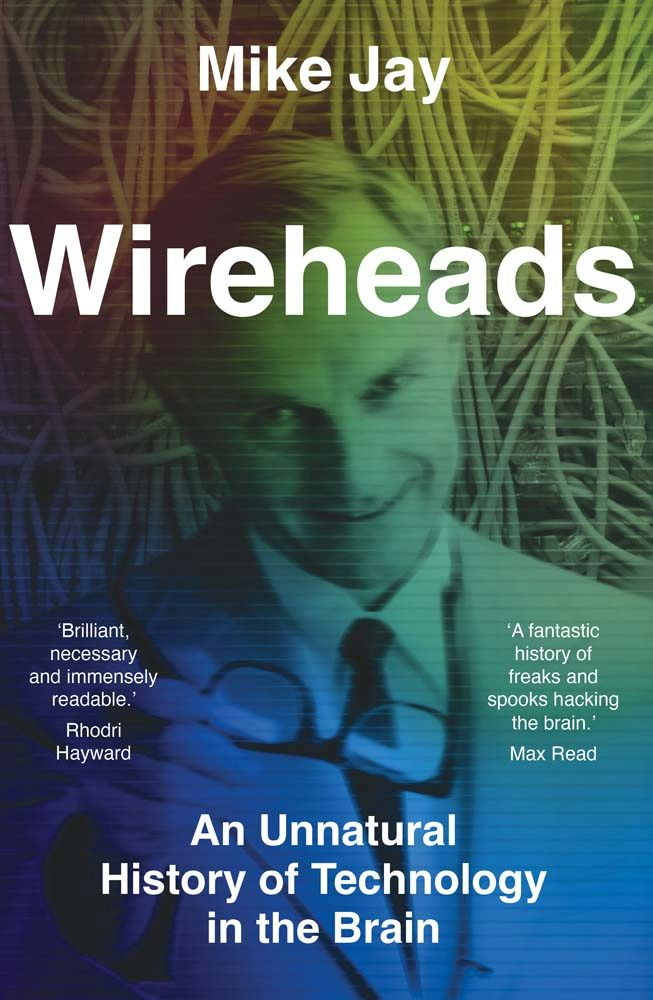
Can technology tap into our minds and influence or even control our thoughts, emotions and behaviour? Could machines one day enhance our intelligence, create artificial happiness, or allow us to experience entirely simulated realities? And if machines become part of our brains, what happens to human freedom and identity? These are some of the fascinating questions explored in Mike Jay’s new book, “Wireheads: An Unnatural History of Technology in the Brain”. The book traces more than two centuries of attempts to understand, stimulate and reshape the human mind through technology. The book begins with early experiments in electricity and fears of mechanical mind control, and moves through the discovery of brainwaves, electrical stimulation, the search for pleasure centres and controversial efforts to alter human behaviour. The book also examines Cold War research and cybernetics. It brings this history into the present, exploring brain-computer interfaces and the ambitious promises surrounding Elon Musk’s Neuralink. Combining fascinating historical stories with scientific insights and philosophical reflection, the book examines both the extraordinary possibilities and the troubling consequences of brain technology. In this episode of Bridging the Gaps, I speak with Mike Jay.
Mike Jay is a celebrated historian of science, medicine, and culture. He is the author of a number of acclaimed books including “Psychonauts”, described by Michael Pollan as “easily the most interesting work of psychedelic history I’ve read in years.”
We start off by exploring why human beings have long been fascinated by the idea of connecting the brain to machines, and how far back this fascination goes. We explore the remarkable story of James Tilly Matthews, who believed that a mysterious machine was controlling his thoughts, and discuss how such beliefs influenced our early understanding of the relationship between the mind and technology.
We then move on to the beginnings of experimental neuroscience, including the disturbing story of Mary Rafferty and the ethical questions raised by early attempts to stimulate the human brain. From there, we explore the development of the EEG, which makes brain activity visible, and its significance for the emerging field of cybernetics.
I then ask Mike about the title “Wireheads” and how this book connects with his earlier research into psychedelic drugs and altered states of consciousness. We examine the search for pleasure centres in the brain, attempts to control violent behaviour through neurological interventions, and the scientific assumptions behind these experiments.
Our conversation then turns to the fascinating story of the God helmet, a device that supposedly produces religious and mystical experiences through electromagnetic stimulation. We discuss what this research reveals about the difficulties of studying consciousness and subjective human experiences.We also explore the darker side of brain technology, including Cold War efforts to develop mind-control techniques and the controversy surrounding Havana syndrome. These stories raise important questions about the boundaries between scientific research, political interests and conspiracy theories.
Looking towards the future, I ask Mike about Neuralink and other brain-computer interfaces, their potential medical applications, and the ambitious claims that such technologies might enhance human intelligence or connect our minds directly to artificial intelligence.
Finally, we discuss the fascinating relationship between science fiction and scientific progress. Why do some imagined technologies eventually become reality, while others remain speculative dreams for centuries? We also reflect on Mike’s remarkable ability to bring these complex historical stories to life. It is a highly informative, thought-provoking and thoroughly interesting discussion about the history, possibilities and limitations of brain technology, and what these developments might mean for our future.
Complement this discussion with “Spark: The Life of Electricity and the Electricity of Life” with Professor Timothy Jorgensen and then listen to “Geniuses, Heroes, and Saints: The Nobel Prize and the Public Image of Science” with Professor Massimiano Bucchi

Connect With Us