
“Everything Evolves” and the Generalised Evolutionary Theory with Professor Mark Vellend
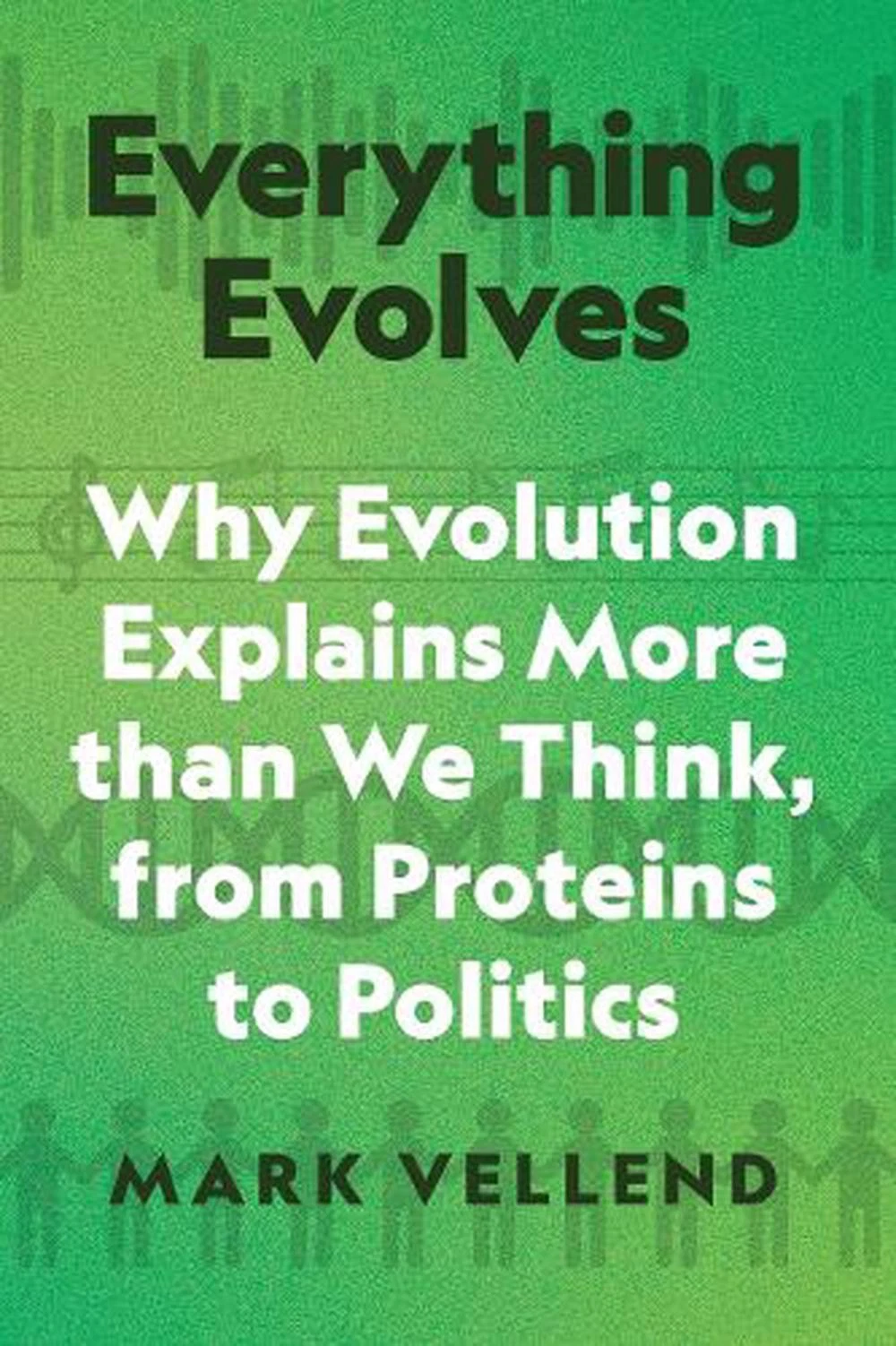
The idea that evolutionary theory applies far beyond biology is not new. Yet one major obstacle to the broader acceptance of a generalized evolutionary theory is our tendency to begin with biology and extend outward from it. This approach obscures an important historical fact. Long before scientists developed theories to explain the evolution of life, scholars in fields such as linguistics, economics, and technology had already proposed ideas about change that were evolutionary in the modern sense.

The evolutionary biologist Stephen Jay Gould even suggested that “Darwin may have cribbed the idea of natural selection from economics.” Beginning with biology can create the misleading impression that evolutionary processes in areas such as language, technology, or economics are weaker or derivative forms of evolution. In reality, evolutionary processes are largely independent of the substrate on which they operate. They generate diverse outcomes—organisms, technologies, and cultural practices—that are well adapted to particular functions.

In his book Everything Evolves: Why Evolution Explains More than We Think, from Proteins to Politics, Professor Mark Vellend shows how evolutionary dynamics shape many aspects of the world around us. He also explores how evolutionary principles are being applied to practical challenges, from increasing the global food supply to developing artificial intelligence systems that can evolve solutions to complex problems.

In this episode of Bridging the Gaps, I speak with Professor Mark Vellend.

Mark Vellend is a professor of biology at Université de Sherbrooke and a Fellow of the Royal Society of Canada.

We begin our discussion with an intriguing idea from the book: reality can be understood through two broad sciences. The first is physics. The second is the science of evolvable systems. We explore this distinction in detail.

We then turn to the concept of generalized evolutionary theory and discuss why it is important to communicate this broader framework to a wider audience. In this context, we also touch on the argument that the strong emphasis on Darwin can sometimes be a distraction from the larger evolutionary perspective.

Next, we examine several examples that illustrate how generalized evolutionary processes allow different artifacts and systems to evolve over time. We then discuss a framework presented in the book that explains how generalized evolution operates. This framework is described using the metaphor of a soundboard, where each knob represents a distinct variable in the evolutionary process. We explore this “Evolutionary Soundboard” in detail.

Our conversation then turns to the role of randomness and the ways systems can improve over time through deliberate design. We also discuss the importance of diversity, which enables and sustains evolutionary processes.

Overall, the discussion is both engaging and informative, raising a number of thought-provoking ideas.

Complement this discussion with “The Evolution of Biological Information: How Evolution Creates Complexity, from Viruses to Brains” with Professor Christoph Adami and then listen to “The Network of Life: A New View of Evolution” with Professor David Mindell.
By |March 15th, 2026|Biology, Knowledge, Research, Technology|

“The Blind Spot: Why Science Cannot Ignore Human Experience” with Professor Adam Frank

The Blind Spot Reviewed on Bridging the Gaps

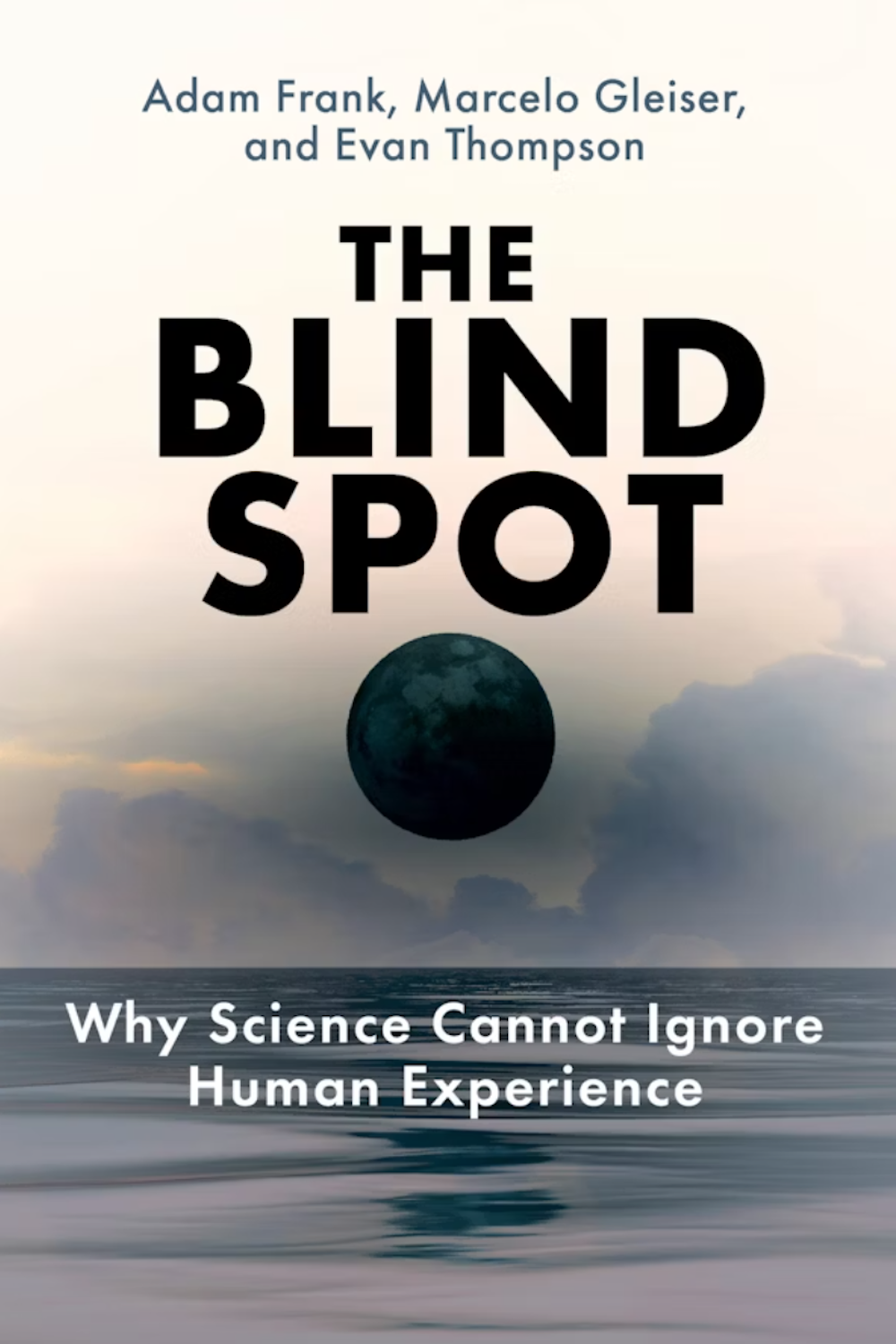
Since the Enlightenment, humanity has turned to science to answer profound questions about who we are, where we come from, and where we’re headed. However, we’ve become stuck in the belief that we can fully understand the universe by viewing it from a detached, external perspective. In focusing solely on external physical realities, imagined from this objective standpoint, we overlook the vital role of our own lived experience. This is the “Blind Spot” that astrophysicist Adam Frank, theoretical physicist Marcelo Gleiser, and philosopher Evan Thompson discuss in their book “The Blind Spot: Why Science Cannot Ignore Human Experience”. They identify this “Blind Spot” as the root of many modern scientific challenges —whether it’s in understanding time and the origin of the universe, quantum physics, the nature of life, artificial intelligence, consciousness, or Earth’s function as a planetary system. In this episode of Bridging the Gaps, I speak with astrophysicist Adam Frank.

Adam Frank is a renowned astrophysicist and professor in the Department of Physics and Astronomy at the University of Rochester. He is a leading expert on the final stages of stellar evolution, particularly for stars like the sun. At the University of Rochester, his computational research group has developed cutting-edge supercomputer tools to study the formation and death of stars. A passionate advocate for science, Frank describes himself as an “evangelist of science,” dedicated not only to uncovering the mysteries of the cosmos but also to sharing the beauty and power of science with the public. He is equally committed to exploring science’s broader role within culture, emphasising its relevance and context in our understanding of the world. His contributions to the field have earned him prestigious recognition, including the Carl Sagan Medal.

In this discussion we delve into why it is crucial to recognize this “Blind Spot” and the profound implications it has for how we approach science and knowledge. By focusing solely on external, objective facts, we miss a deeper understanding of reality—one that includes our subjective experience as an integral part of the equation. This Blind Spot has led to significant challenges in fields like quantum physics, cosmology, and the study of consciousness, where the limitations of purely objective observation become evident.

We also explore an alternative vision for science: that scientific knowledge should not be viewed as a fixed, immutable set of facts, but rather as a dynamic, evolving narrative. This narrative emerges from the constant interplay between the external world and our lived experience of it. In this view, science becomes a process of continuous self-correction, where both the observer and the observed are part of an evolving relationship. Frank stresses that recognizing this interplay allows us to break free from the illusion of absolute knowledge and opens up a more holistic, adaptive, and integrated way of understanding the universe. This shift in perspective has the potential to reshape how we approach not only scientific inquiry but also our relationship with reality itself. This has been an incredibly enlightening and deeply informative discussion, offering valuable insights and fresh perspective.

Complement this discussion with “The Joy of Science” with Professor Jim Al-Khalili and the listen to “Sharing Our Science: How to Write and Speak STEM” with Professor Brandon Brown

By |September 22nd, 2024|Future, Knowledge, Philosophy, Physics, Podcasts|

“Machines like Us: TOWARD AI WITH COMMON SENSE” with Professor Ronald Brachman

Machines Like us reviewed on Bridging the Gaps

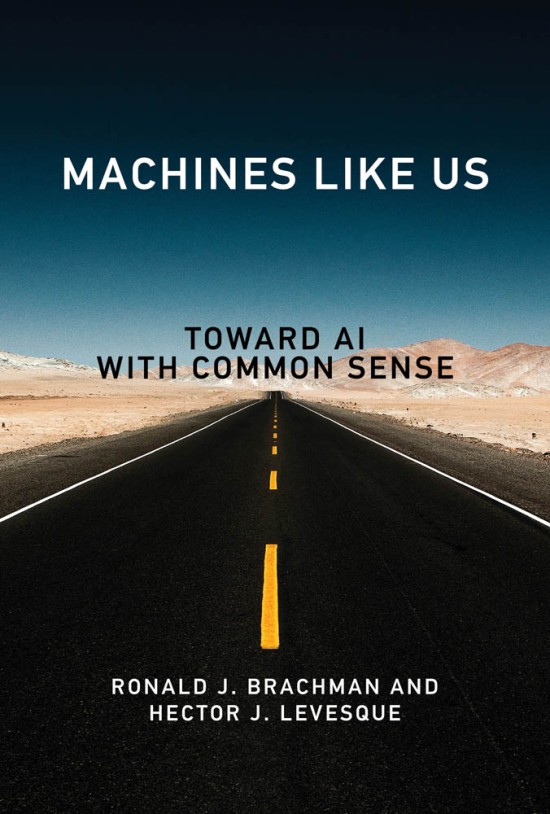
There is a consensus among the researchers in the field of artificial intelligence and machine learning that today’s artificial intelligence systems are narrowly focused, are designed to tackle specialised tasks and cannot operate in general settings. An important feature of the human brain that enables us to operate in general settings, and in unfamiliar situations is our common sense. In their new book “Machines like Us:
TOWARD AI WITH COMMON SENSE” Hector Levesque and Ronald Brachman explain “why current AI systems hopelessly lack common sense, why they desperately need it, and how they can get it”. In this episode of Bridging the Gaps, I speak with Professor Ronald Brachman, one of the authors of this book. We discuss various topics covered in the book and explore the question, how we can create artificial intelligence with broad, robust common sense rather than narrow, specialised expertise.

Professor Ron Brachman is the director of the Jacobs Technion-Cornell Institute and is a professor of computer science at Cornell University. Previously, he was the Chief Scientist of Yahoo! and head of Yahoo! Labs. Prior to that, he was the Associate Head of Yahoo! Labs and Head of Worldwide Labs and Research Operations.

We start off with a detailed discussion about the progress that we have made in recent decades, in developing narrowly focused and task oriented artificial intelligence systems. Some of these systems outperform humans; however we do acknowledge and discuss the need for developing artificial intelligence systems that can operate in general settings. We discuss the concept of artificial general intelligence and explore how understanding “human common sense” and equipping AI with common sense is an extremely important milestone in our journey toward developing artificial general intelligence. We discuss the challenge of developing a clear and thorough understanding of the nature and working of human common sense. We explore how “common sense” might be modelled and incorporated in future artificial intelligence systems. We then discuss the future of artificial general intelligence.

Complement this discussion with Artificial Intelligence: A Guide for Thinking Humans” with Professor Melanie Mitchell and with Artificial Intelligence: Fascinating Opportunities and Emerging Challenges with Professor Bart Selman and then listen to 2062: The World That AI Made” with Professor Toby Walsh