
The Evolution of Knowledge and Rethinking Science for The Anthropocene with Professor Jürgen Renn
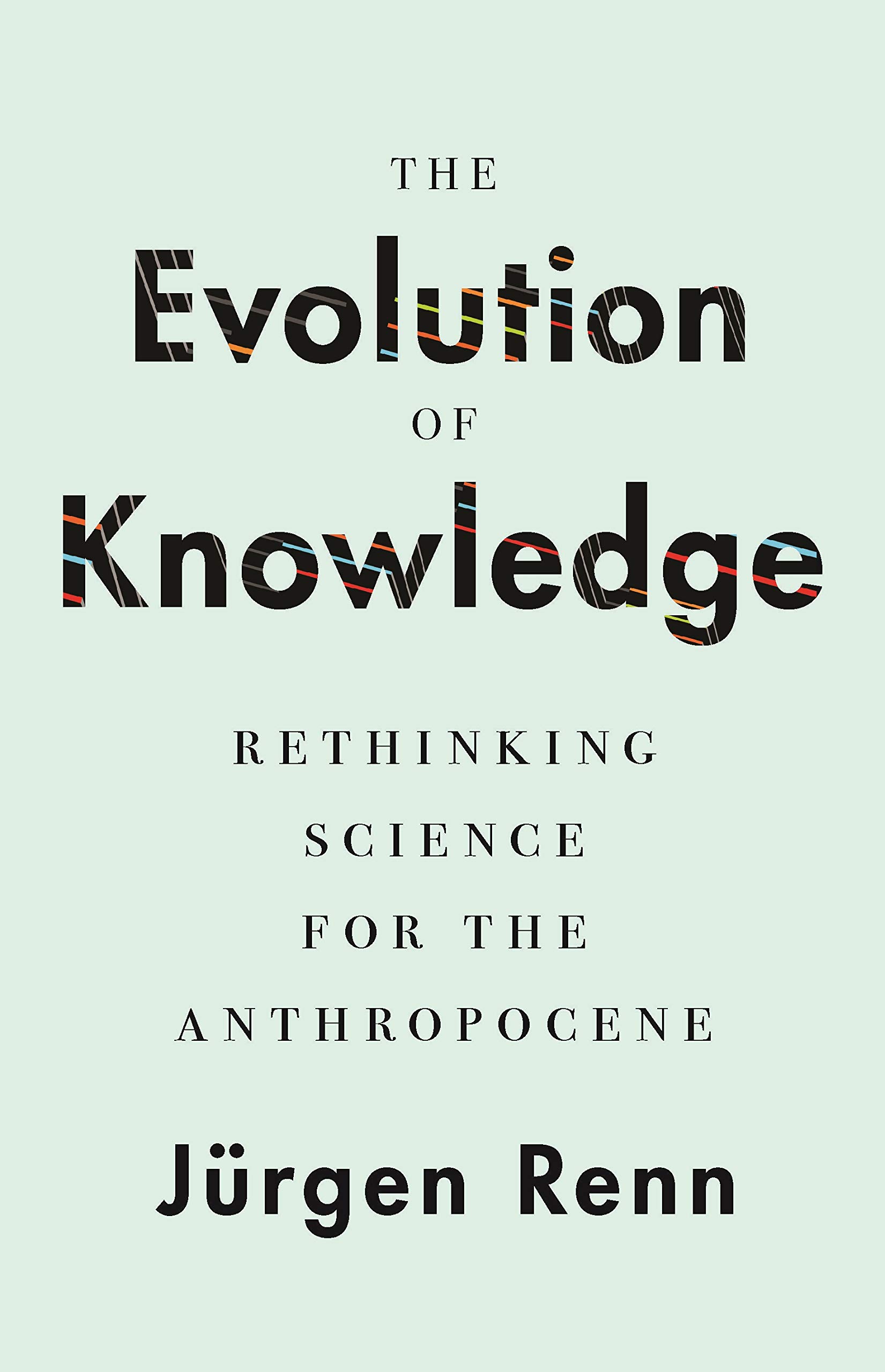
Most history of science publications narrowly focus on specific periods in human history, or particular disciplines of scientific discovery, or small sets of scientists and philosophers. However there is a view that history of science can be better understood against the background of a history of knowledge including not only theoretical but also intuitive and practical knowledge. This can be further broadened by including cognitive, material and social dimensions of knowledge. Studying how knowledge structures are formed and evolve as knowledge spreads should further enrich our understanding of development and progress of science and technology. In his new book “ The Evolution of Knowledge: Rethinking Science for the Anthropocene” Jürgen Renn presents a new way of thinking about the history of science and technology, one that offers a grand narrative of human history in which knowledge serves as a critical factor of cultural evolution.

Jürgen Renn is a director at the Max Planck Institute for the History of Science in Berlin, where, together with his group, he researches structural changes in systems of knowledge. Jürgen Renn is honorary professor for History of Science at both the Humboldt-Universität and the Freie Universität Berlin. He is currently serving as Chairperson of the Humanities Sciences Section of the Max Planck Society.

In this book Jürgen Renn examines the role of knowledge in global transformations going back to the dawn of civilization while providing vital perspectives on the complex challenges confronting us today in the Anthropocene—this new geological epoch shaped by humankind. He reframes the history of science and technology within a much broader history of knowledge, analyzing key episodes such as the evolution of writing, the emergence of science in the ancient world, the Scientific Revolution of early modernity, the globalization of knowledge, industrialization, and the profound transformations wrought by modern science. He investigates the evolution of knowledge using an array of disciplines and methods, from cognitive science and experimental psychology to earth science and evolutionary biology. The result is an entirely new framework for understanding structural changes in systems of knowledge—and a bold new approach to the history and philosophy of science.

In this episode of Bridging the Gaps, I speak with professor Jürgen Renn, one of today’s preeminent historians of science. We discuss fascinating research that he presents in The Evolution of Knowledge. We discuss the origin, evolution and spread of knowledge, and other insights that Jürgen Renn discusses in this thorough book.

Complement this interesting discussion with fascinating conversation “Origin of Mathematics and Mathematical Thinking with Dr Keith Devlin” and then listen to “Robots, Artificial Life and Technology Imagined by the Ancients” with Adrienne Mayer.

By |June 2nd, 2020|Information, Knowledge, Podcasts|

“The Technology Trap” and the Future of Work with Dr Carl Frey

An intriguing set of questions that is being explored by researchers across the globe and is being discussed and brainstormed in various organisations and think tanks is: “what is the future of work”; “how forthcoming AI and Automation revolution will impact on the nature and structure of work”; and “what would be the impact of these changes on the fabric of society from social, economic and political perspectives”.

In a 2013 study “The Future of Employment: How Susceptible are Jobs to Computerisation?” researchers Dr Carl Benedikt Frey and Dr Michael Osborne made an important observation: about 47% jobs in the US will be lost to automation. Dr Carl Frey is the co-director of programme on technology and employment at Oxford Martin School at Oxford University. His research focuses on “how advances in digital technology are reshaping the nature of work and jobs and what that might mean for the future”. In 2016, he was named the 2nd most influential young opinion leader by the Swedish business magazine Veckans Affärer.

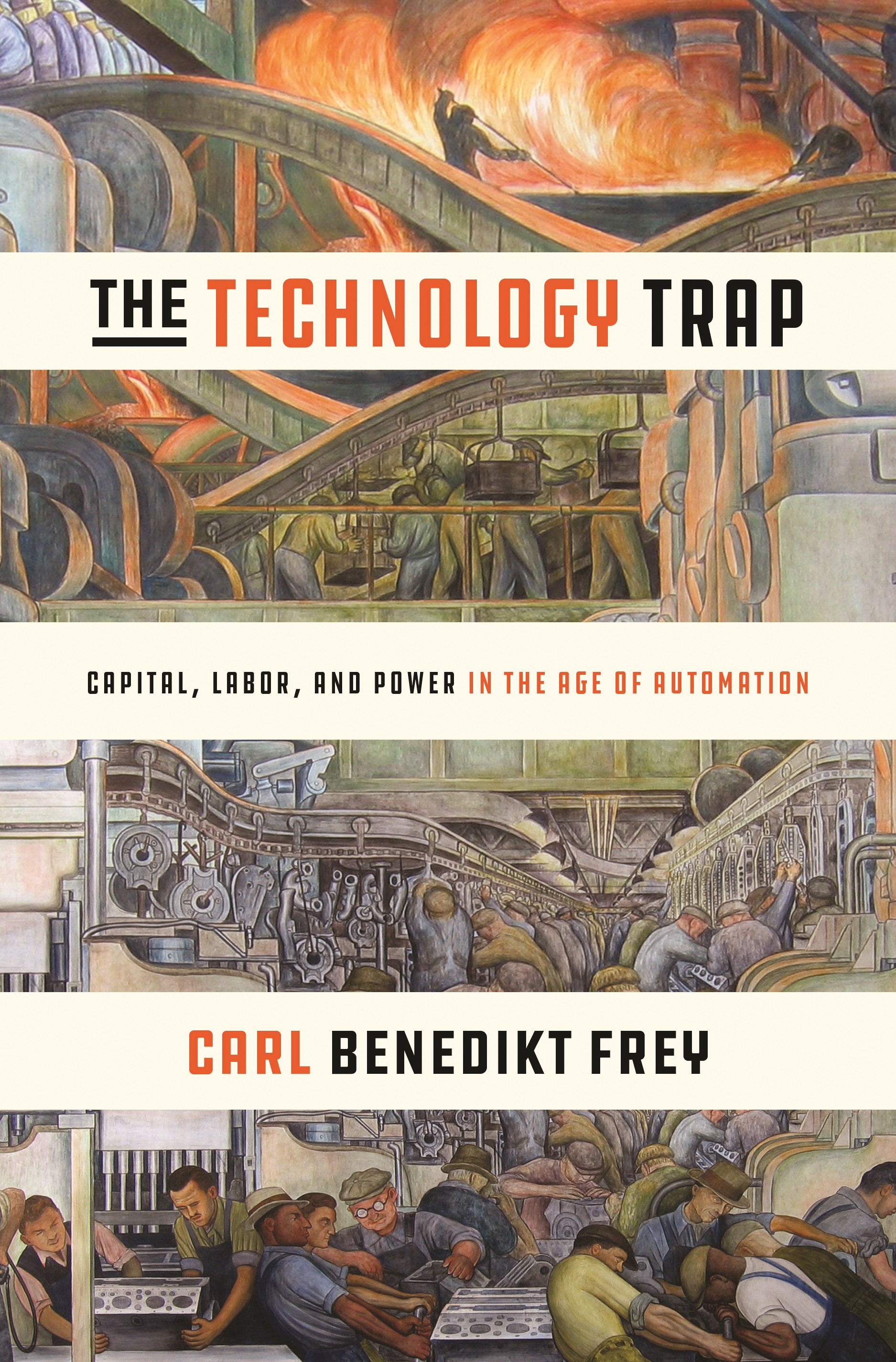
A recent book by Dr Carl Frey presents a thorough review of the history of technological progress and how it has radically shifted the distribution of economic and political power among society’s members. The title of the book is “The Technology Trap: Capital, Labour and Power in the Age of Automation”. The Industrial Revolution was a defining moment in history, but few grasped its enormous consequences at the time. This books demonstrates that the lessons of the past can help us to more effectively face the present and the forthcoming AI and automation revolution.
Dr Carl Frey shows the Industrial Revolution created unprecedented wealth and prosperity over the long run, but the immediate consequences of mechanization were devastating for large swaths of the population. Middle-income jobs withered, wages stagnated, the labour share of income fell, profits surged, and economic inequality skyrocketed. These trends, Frey documents, broadly mirror those in our current age of automation, which began with the Computer Revolution.

Just as the Industrial Revolution eventually brought about extraordinary benefits for society, artificial intelligence systems have the potential to do the same. But Frey argues that this depends on how the short term is managed. The decisions that we make now and the policies that we develop and adopt now will have profound impact on the future of work and job market. In the nineteenth century, workers violently expressed their concerns over machines taking their jobs. The Luddite uprisings joined a long wave of machinery riots that swept across Europe and China. Today’s despairing middle class has not resorted to physical force, but their frustration has led to rising populism and the increasing fragmentation of society. As middle-class jobs continue to come under pressure, there’s no assurance that positive attitudes to technology will persist.

Dr Carl Frey joins me for this episode of bridging the Gaps. In this podcast we discuss the ideas that Dr Frey presents in this book. Before discussing the future of work, we look at the history of work and how the nature of work evolved through various ages and how did it impact the equality in the society. Dr Frey notes in his book that the age of inequality began with the Neolithic revolution; we discuss this in detail. We then discussed first and second industrial revolutions and the age of digital transformation. We also discuss the rise of politics of polarisation and finally we discuss the future of work. This has been a fascinating conversation with a thought leader, on a hugely important subject.

Complement this with discussions on Artificial Intelligence and the future of humanity by visiting “Artificial Intelligence: Fascinating Opportunities and Emerging Challenges” with professor Bart Selman and discussion with professor Toby Walsh “2062: The World That AI Made”.

By |October 22nd, 2019|Artificial Intelligence, Computer Science, Future, Knowledge, Podcasts|

How Cooking Made Us Human with Professor Richard Wrangham

Humans are the only animals that cook their food. One of the implications of cooking food, as noted by Oliver Goldsmith is, “of all other animals we spend the least time in eating”. In a ground-breaking theory of our origins, primatologist Richard Wrangham argues that the shift from raw to cooked food was a key factor in human development. When our ancestors adapted to using fire, humanity as we know it, began. Wrangham notes that as a result of eating cooked food, the human digestive tract shrank and the brain grew. Eating cooked plants or meat makes digestion easier and the energy we formerly spent on digestion was freed up, enabling our brains to grow. Cooking increases the proportion of nutrients that can be digested, makes food easier to digest and kills pathogens (harmful bacteria and viruses). Time once spent chewing tough food could be used instead to hunt and undertake other tasks and activities. Cooking became the basis for pair bonding and marriage, created household and shaped family structures, and even led to a gender based division of labour.

Richard Wrangham is a professor of Biological Anthropology at Harvard University and founded the Kibale Chimpanzee Project in 1987. He has conducted extensive research on primate ecology, nutrition, and social behaviour. In his book “Catching Fire: How Cooking Made Us Human” Wrangham argues that cooking food is obligatory for humans as a result of biological adaptations and the cooking, in particular, the consumption of cooked food might explain the increase in human brain size, smaller teeth and jaws, and smaller more effective digestive system. Wrangham’s “Catching Fire” presents an interesting narrative that how we came to be the social and intelligent beings that we are today.

“Cooking was a great discovery not merely because it gave us better food, or even because it made us physically human. It did something even more important: it helped make our brains uniquely large, providing a dull human body with a brilliant human mind” – Richard Wrangham

Complement this with slightly different but equally interesting discussion “Robots, Artificial Life and Technology Imagined by the Ancients” with Adrienne Mayer.

By |July 20th, 2019|History, Knowledge, Podcasts|