
“Becoming Martian: How Living in Space Will Change Our Bodies and Minds” with Professor Scott Solomon
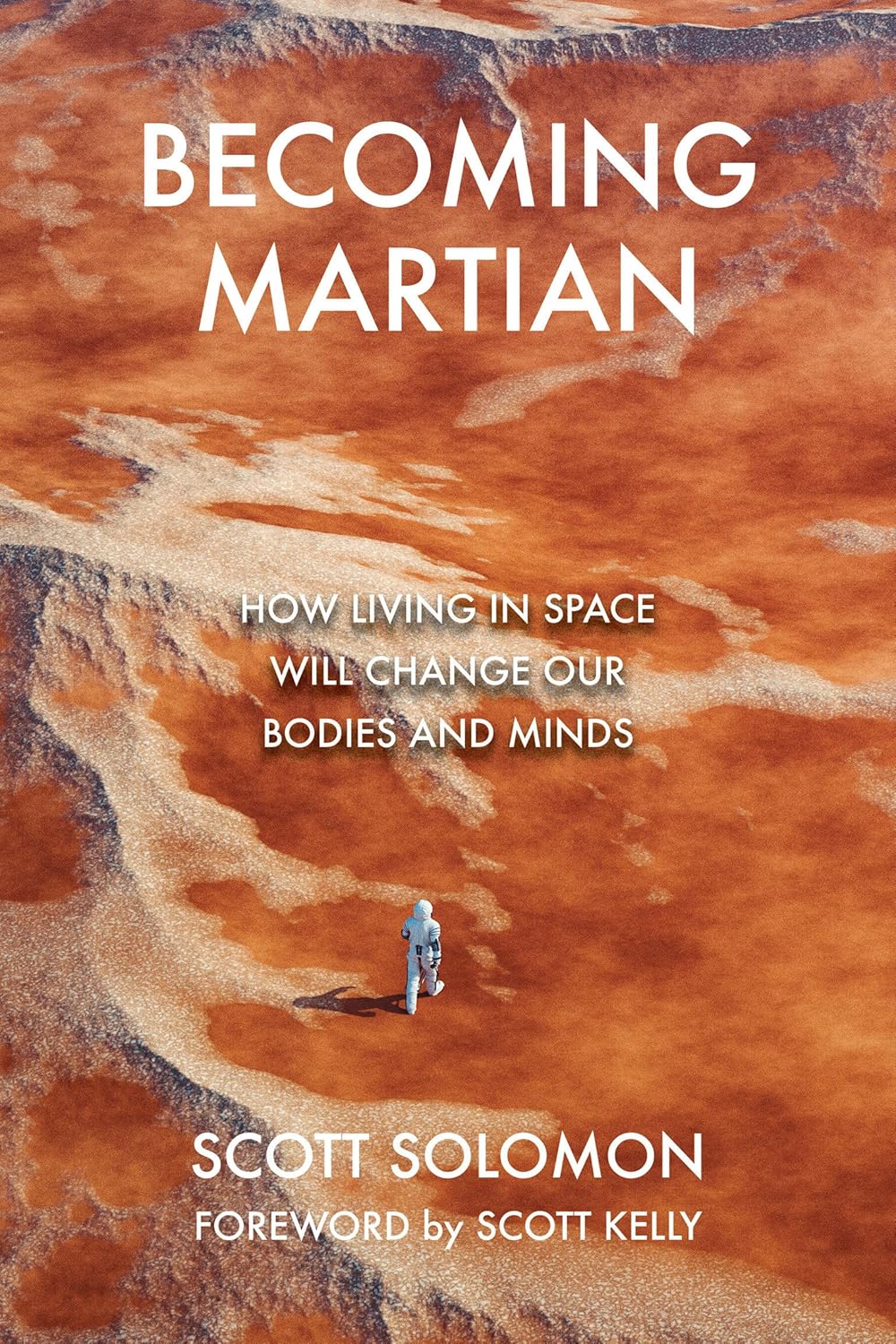
We are entering a new era of space exploration—one in which, for the first time, large numbers of people may travel beyond Earth. Some may even choose to remain there. This raises important questions: how will the extreme conditions of space affect the human body and mind? What can spacefaring individuals expect during journeys to an orbiting station, the Moon, or Mars?
Looking further ahead, what might happen to children born on another planet? Could they gradually evolve into a distinct human variant? Would adaptation occur naturally through evolution, or might advances in genetic engineering enable more rapid, intentional changes to help humans thrive in unfamiliar environments?
In Becoming Martian, Scott Solomon examines how humanity’s expansion into space could reshape both our physiology and psychology. The book explores how life beyond Earth may influence future generations, as well as the potential unintended consequences of establishing human settlements in space. In this episode of Bridging the Gaps, I speak with Professor Scott Solomon about these ideas.
Scott Solomon is a biologist, science communicator and a teaching Professor at Rice University in Houston. He is also a Research Associate at the Smithsonian Institution’s National Museum of Natural History. He is also the host of the podcast Wild World with Scott Solomon.
We begin our discussion with a set of timely and relevant questions surrounding humanity’s renewed interest in returning to the Moon. We explore the motivations behind this shift, considering both the rapid advancement of new technologies that make such missions feasible and the emergence of a new space race shaped by evolving geopolitical dynamics.
From there, we turn our attention to NASA’s Space Launch System and the broader Artemis program, including its planned missions and long-term objectives. This leads into a wider discussion about humanity’s future in space.
We then examine the physiological effects of space travel, particularly for missions in which humans return to Earth. Topics include the impact of prolonged exposure to microgravity on muscle mass, bone density, and other aspects of human health.
Shifting to a longer-term perspective, we consider what will happen when humans travel to destinations such as the Moon, Mars, and beyond with the intention of establishing permanent settlements. We explore how such environments may affect human biology and what it means to live outside Earth’s uniquely supportive ecosystem.
The conversation also delves into the challenges of sustaining life in environments devoid of existing biological systems. We discuss, in detail, the complexities of human reproduction in space and how future generations might develop under such conditions.
Finally, we examine both the natural adaptability of humans and the role of cutting-edge genetic research in potentially enabling us to survive—and even thrive—in entirely new environments. Overall, the discussion is deeply engaging, thought-provoking, and highly informative.
Complement this discussion with “Off-Earth: Ethical Questions and Quandaries for Living in Outer Space” with Dr Erika Nesvold and then listen to “A Traveller’s Guide to the Stars” with Physicist, Author and Nasa Technologist Les Johnson.

Connect With Us