
Augmented Thinking: The New Convergence of Art, Technology, and Science with Professor Julio Ottino
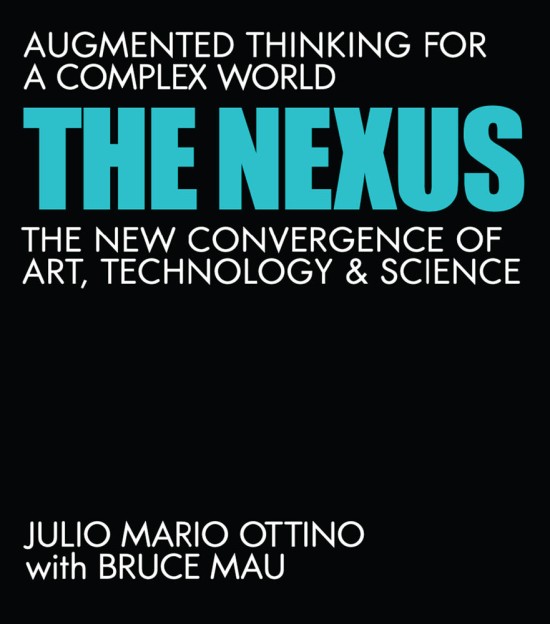
We live in an age of increasing complexity and uncertainty. We live in a time when humanity faces extremely complex challenges. Our ability, or lack thereof, to create solutions to such extremely complicated challenges may determine our long-term survival as a civilization. The question is: is our existing style of thinking adequate, or do we require a new style of thinking in order to innovate and lead into the future. In their recent book Julio Ottino and Bruce Mau make a case for “The Nexus”, a radically new way of thinking — one in which art, technology, and science converge to expand our creativity and augment our insight. In this episode or Bridging the Gaps I speak with Julio Ottino who explains “the Nexus” and guides us how to embrace the powerful idea of complementarity, where opposing extremes coexist. We discuss how blurring the lines between the three major realms of human creation — art, technology, and science — results in a significant expansion of thinking spaces and a richness of potential ideas.

Julio Ottino is Dean of Engineering and Applied Sciences, and a professor of Chemical and Biological Engineering at Northwestern University, in Illinois. He is also the founding co-director of Northwestern University’s Institute on Complex Systems. He is a thought leader, author, artist, and internationally recognized researcher in chaos theory and complex systems whose work has been featured in “Nature”, “Science”, and “Scientific American”.

We begin our discussion by looking back at the time before the divergence of disciplines and how key figures in science immensely benefited from talents and skills in a variety of fields. Then we talk about how, when, and why the disciplines diverged. We delve into the concept of “the Nexus” and discuss whole-brain thinking. The book is jam-packed with wonderful photographs and diagrams. I ask Professor Ottino to describe the process that he followed to write this book. This has been a wonderful discussion.

Complement this discussion with Asking Better Questions for Creative Problem Solving, Innovation and Effective Leadership with Hal Gregersen and with “Learning How to Learn”: Techniques to Help You Learn with Dr Barbra Oakley and then listen to Multiple Intelligences, Future Minds and Educating The App Generation: A discussion with Dr Howard Gardner
By |June 27th, 2022|Knowledge, Podcasts, Research, Technology|

“Machines like Us: TOWARD AI WITH COMMON SENSE” with Professor Ronald Brachman

Machines Like us reviewed on Bridging the Gaps

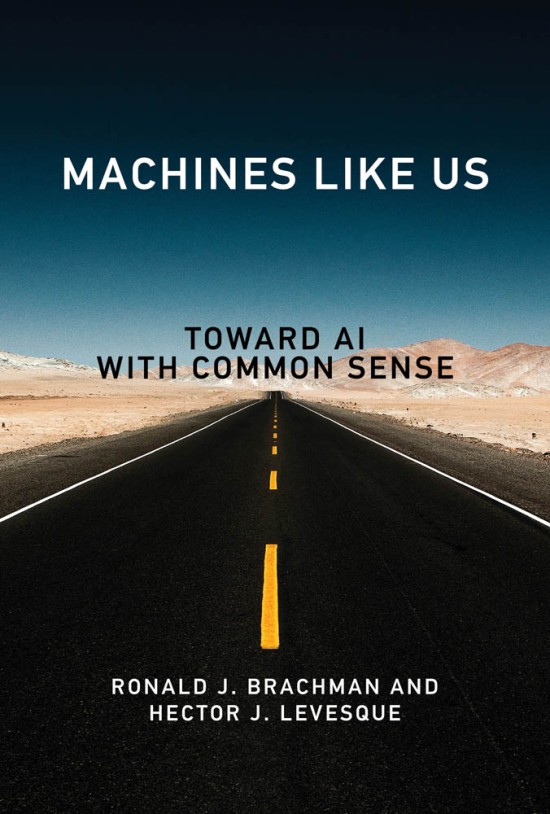
There is a consensus among the researchers in the field of artificial intelligence and machine learning that today’s artificial intelligence systems are narrowly focused, are designed to tackle specialised tasks and cannot operate in general settings. An important feature of the human brain that enables us to operate in general settings, and in unfamiliar situations is our common sense. In their new book “Machines like Us:
TOWARD AI WITH COMMON SENSE” Hector Levesque and Ronald Brachman explain “why current AI systems hopelessly lack common sense, why they desperately need it, and how they can get it”. In this episode of Bridging the Gaps, I speak with Professor Ronald Brachman, one of the authors of this book. We discuss various topics covered in the book and explore the question, how we can create artificial intelligence with broad, robust common sense rather than narrow, specialised expertise.

Professor Ron Brachman is the director of the Jacobs Technion-Cornell Institute and is a professor of computer science at Cornell University. Previously, he was the Chief Scientist of Yahoo! and head of Yahoo! Labs. Prior to that, he was the Associate Head of Yahoo! Labs and Head of Worldwide Labs and Research Operations.

We start off with a detailed discussion about the progress that we have made in recent decades, in developing narrowly focused and task oriented artificial intelligence systems. Some of these systems outperform humans; however we do acknowledge and discuss the need for developing artificial intelligence systems that can operate in general settings. We discuss the concept of artificial general intelligence and explore how understanding “human common sense” and equipping AI with common sense is an extremely important milestone in our journey toward developing artificial general intelligence. We discuss the challenge of developing a clear and thorough understanding of the nature and working of human common sense. We explore how “common sense” might be modelled and incorporated in future artificial intelligence systems. We then discuss the future of artificial general intelligence.

Complement this discussion with Artificial Intelligence: A Guide for Thinking Humans” with Professor Melanie Mitchell and with Artificial Intelligence: Fascinating Opportunities and Emerging Challenges with Professor Bart Selman and then listen to 2062: The World That AI Made” with Professor Toby Walsh

“The Joy of Science” with Professor Jim Al-Khalili

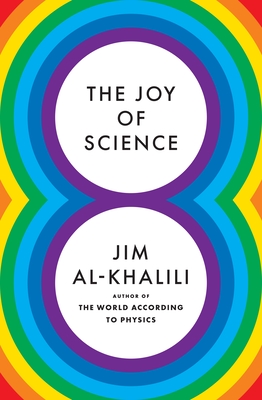
Can living scientifically empower us to navigate the complexities of today’s complex and unpredictable world? Can the joy of critical thinking and the effectiveness of the scientific method assist us in making better decisions? Can living a more rational life help us navigate modern life more confidently? In his new book “The Joy of Science” acclaimed physicist Jim Al-Khalili invites readers to engage with the world as scientists have been trained to do. He shows how the fundamental principles at the heart of scientific thinking, as well as the scientific process, are profoundly relevant to the perplexing times we live in and the tough choices we make. In this episode of Bridging the Gaps, I speak with professor Jim Al-Khalili and we thoroughly discuss very interesting and deeply intriguing ideas that he presents in this book.

Professor Jim Al-Khalili is a theoretical physicist at the University of Surrey where he holds a Distinguished Chair in physics as well as a university chair in the public engagement in science. He is a prominent author, broadcaster and one of Britain’s best-known science communicators.

I start our discussion with the question that how the discipline of science should be perceived. We acknowledge that there are many ways scientific work is carried out in many different disciplines. We discuss the issue of “relative truth” and how biases held by individuals impact their opinions and distort their view and lead them to their own version of truth. We explore how science deals with the issue of relative truth. We probe how the scientific method enables us to continue researching in the presence of uncertainty. We investigate the impact of misinformation and disinformation on the disciple and cause of science. We also touch upon how rational humans can become; can we think rationally only up to certain point. We discuss in detail how scientific information should be presented to policy makers that should enable and empower them to make better decisions and to make the right choices. Finally, I ask Professor Jim Al-Khalili to tell us about his research in the field of open quantum systems. This has been a fantastic discussion.

Complement this with Asking Better Questions for Creative Problem Solving, Innovation and Effective Leadership with Hal Gregersen and then listen to On Public Communication of Science and Technology with Professor Bruce Lewenstein

By |May 13th, 2022|Biology, Future, Information, Knowledge, Physics, Podcasts, Research, Technology|