“Geniuses, Heroes, and Saints: The Nobel Prize and the Public Image of Science” with Professor Massimiano Bucchi

In a world where scientific work often feels distant and difficult to grasp, the Nobel Prize makes science visible and understandable in a unique way. It is the most recognized and prestigious award for individual scientific achievement, giving a human face to great discoveries and turning them into powerful stories. The winners could be global figures like Albert Einstein or little-known doctors working in remote towns. Some prizes went to breakthroughs later proven wrong, and many names have faded from memory. Yet, as Massimiano Bucchi shows, the Nobel Prize shaped how people saw science throughout the twentieth century—an image that continues to influence us in surprising ways today.

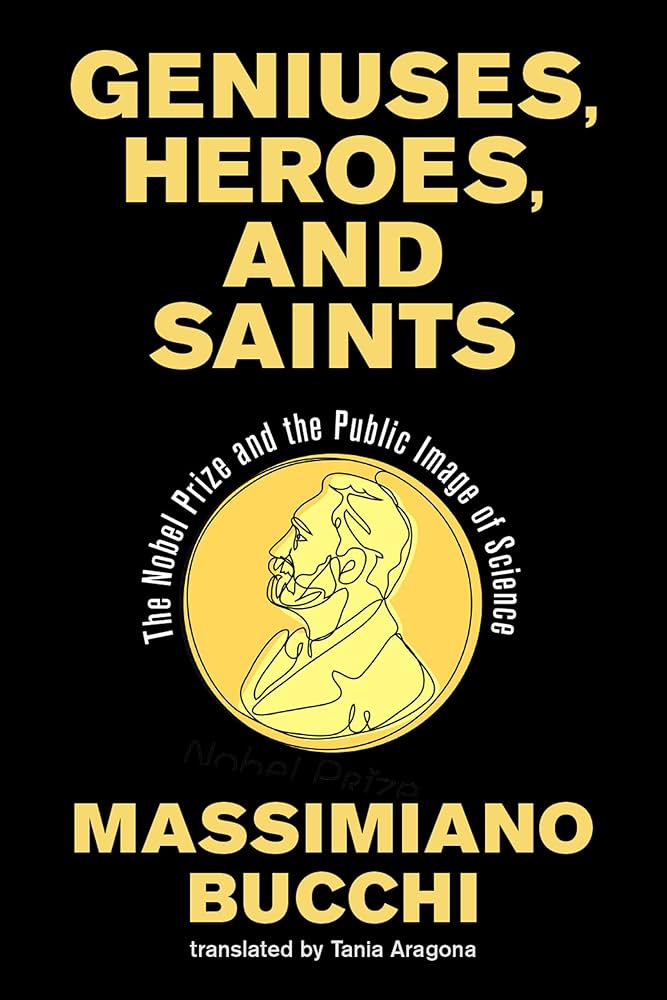
In his book Geniuses, Heroes, and Saints: The Nobel Prize and the Public Image of Science, Professor Bucchi tells the story of how the Nobel Prize transformed science into something more than a technical field. It became an epic human pursuit, shaped by history and shared with the public. In this episode of Bridging the Gaps, I speak with Professor Massimaino Bucchi.

Professor Massimiano Bucchi is a leading scholar in the field of science communication and Professor of Science and Technology in Society at the University of Trento. He is the former editor of Public Understanding of Science and the author of books, including Newton’s Chicken and the co-edited Handbook of Public Communication of Science and Technology.

We begin the conversation with the three main narratives outlined in the book that define the Nobel Prize. First, the scientist as genius—a creative visionary, a brilliant intellect, often portrayed as a solitary figure with a romantic aura. Second, the scientist as national hero—a symbol of international rivalry played out in a peaceful, rational contest. Third, the scientist as saint—a moral exemplar celebrated for humility, modesty, and complete devotion to science.

From there, we trace the history of the Nobel, its origins, and its early role in European society. We examine the first laureates, notable controversies, and famous recipients—including the story of Einstein’s long-delayed award and the “interesting” aspects of the work that finally earned him the prize.
We also explore the Nobel’s impact on public perceptions of science, the ceremonial “royal touch” that surrounds it, and how the prize might evolve in the twenty-first century. We then discuss science communication more broadly.
Overall, it has been a rich and fascinating discussion.

Complement this discussion with “Sharing Our Science: How to Write and Speak STEM” with Professor Brandon Brown and then listen to On Public Communication of Science and Technology with Professor Bruce Lewenstein

By |August 24th, 2025|History, Podcasts, Research, Social Science|

“The Line: AI and the Future of Personhood” with Professor James Boyle

The Line James Boyle on Bridging the Gaps

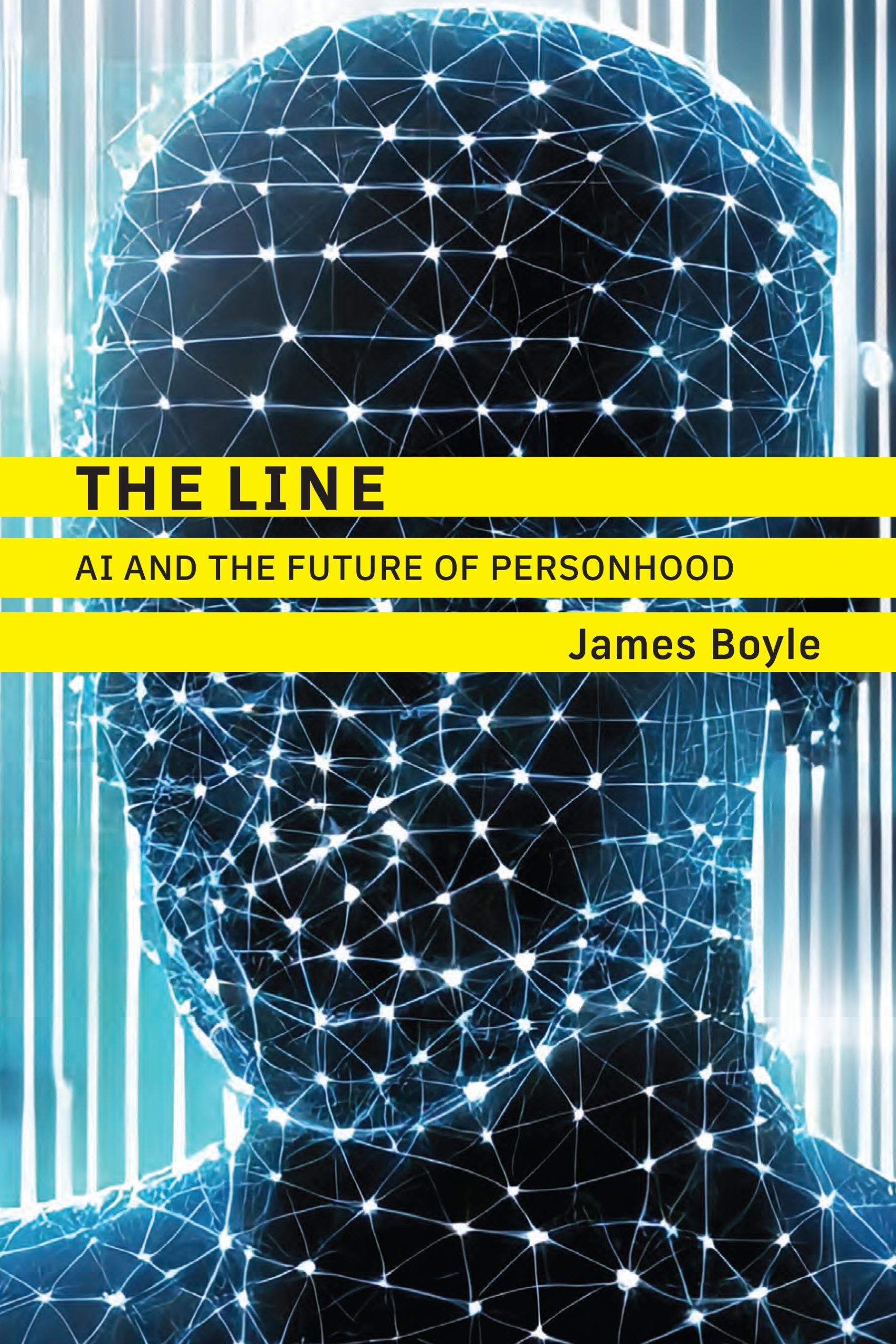
Humans are no longer the only entities capable of generating language and ideas with fluency. But this advancement raises a profound question: are artificial intelligence systems truly conscious, or are they simply performing an elaborate imitation of human thought? And if, in the future, claims of AI consciousness become more credible, how will that shift our understanding of these technologies? Will we continue to see them as tools, or begin to recognize them as something closer to persons? In his book “The Line: AI and the Future of Personhood”, Professor James Boyle confronts these complex issues. He explores how questions that once belonged to the realm of science fiction have now become urgent and real. He examines how this technological shift might redefine our understanding of personhood and challenge the boundary—”the line”—that separates humans from everything else, as well as persons with legal rights from inanimate objects. In this episode of Bridging the Gaps, I speak with Professor James Boyle to explore these timely, thought provoking and transformative questions.

James Boyle is a professor of Law at Duke Law School, founder of the Center for the Study of the Public Domain, and former Chair of Creative Commons. He is the winner of the Electronic Frontier Foundation’s Pioneer Award for his work on digital civil liberties.

We begin by talking about the idea of personhood—what it means, how we define it, and what separates beings that have personhood from those that don’t. I ask whether it’s simply consciousness that makes the difference. We then explore why empathy is an important part of thinking about personhood.

Next, we discuss the challenge of using consciousness as a dividing line. If consciousness is what separates those with personhood from those without, how can we use such a complex and unclear concept to draw that line?

In his book, The Line: AI and the Future of Personhood, James Boyle uses many examples from science fiction to explore these tough questions. I found this approach fascinating, and I asked him why he chose science fiction as a way to talk about such deep and complicated ideas.

We also talk about similar issues that came up when thinking about the rights of corporations and other non-living things. Then we move on to what we can learn from how rights have been developed for non-human animals. Finally, we touch on recent court cases involving decisions made by artificial intelligence.

Overall, this was a very engaging and insightful conversation.

Complement this discussion with “Evolutionary Intelligence: How Technology Will Make Us Smarter” with Professor W. Russell Neuman and the listen to Reclaiming Human Intelligence and “How to Stay Smart in a Smart World” with Prof. Gerd Gigerenzer

“The Painful Truth about Hunger in America” with Professor Mariana Chilton

Hunger is far more than the immediate and tangible experience of not being able to find or buy food. While it is true that hunger is often depicted as the physical sensation of an empty stomach—a condition that can be temporarily alleviated by food—the issue runs much deeper. Hunger is more than the absence of food; it is a manifestation of deeper, societal and structural failings leading to individual and collective trauma. To genuinely combat hunger, we must engage with its underlying causes—economic inequality, systemic discrimination, and societal neglect—and strive to create a compassionate and just society where all people have the resources, respect, and opportunities they need to thrive. In her book “The Painful Truth about Hunger in America: Why We Must Unlearn Everything We Think We Know—and Start Again” professor Mariana Chilton presents a bold, transformative perspective on addressing hunger and poverty in the United States. The book emphasises that hunger in the United States is underpinned by profound societal and structural failures that perpetuate poverty and ensure that millions remain trapped in cycles of scarcity. In this episode of Bridging the Gaps I speak with professor Mariana Chilton.

Although the book focuses on the issues of hunger and poverty in the United States, the human experiences and the underlying structural and social root causes it explores are often universal. The insights and key points raised in the book resonate with similar challenges faced in other societies and regions, making its research and findings valuable for broader learning and application.

Mariana Chilton is a Professor of Health Management and Policy at Drexel University’s Dornsife School of Public Health. She is the founder of the Center for Hunger-Free Communities, where she initiated impactful programs such as “Witnesses to Hunger”, aimed at amplifying women’s voices in the national conversation on hunger and poverty, and the “Building Wealth and Health Network”, which focuses on fostering economic security and healing. Chilton has provided expert testimony on hunger solutions before both the US Senate and the House of Representatives.

Our discussion delves into the intricate connections between hunger and trauma, revealing the emotional and psychological toll on individuals and communities. We examine the persistent nature of poverty and its link to generational trauma and explore the complex relationship between poverty, violence, and systemic inequalities. Professor Chilton provides thoughtful explanations supported by real-world examples and personal stories, many of which are detailed in her book. We also discuss challenges involved in conducting research on such sensitive topics, particularly when working with vulnerable populations. The discussion covers both ethical considerations and the logistical obstacles researchers face when collecting data and sharing findings in a manner that respects and empowers participants. Professor Chilton’s insights shed light on the importance of compassionate, inclusive approaches to research and advocacy that prioritise the voices of those most affected by these issues.

Complement this discussion with “The Blind Spot: Why Science Cannot Ignore Human Experience” with Professor Adam Frank and then listen to “A Passion for Ignorance” and for Denials and Negations with Professor Renata Salecl.

By |November 17th, 2024|Podcasts, Research, Social Science, Sustainability|