
“Seven Decades: How We Evolved to Live Longer” with Professor Michael Gurven
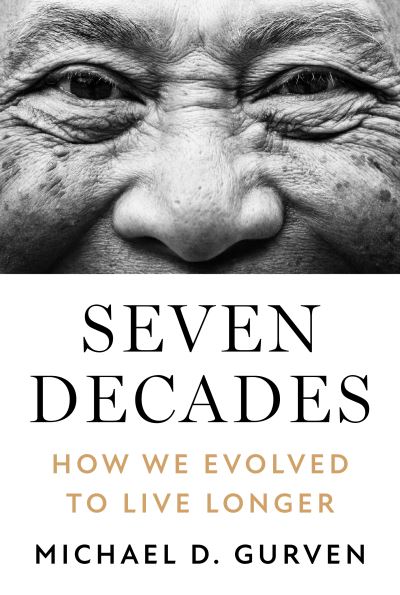
Our ability to live for many decades is often viewed as a modern luxury made possible by clean water, improved living conditions, and advances in medicine. Yet, human longevity is actually part of our deep evolutionary history. The long-standing belief that life in the past was “nasty, brutish, and short” is a widespread misconception—one rooted in misleading averages and often repeated in textbooks and popular media.

In his book “Seven Decades: How We Evolved to Live Longer”, anthropologist Professor Michael Gurven challenges this myth. Drawing on extensive fieldwork, he presents compelling evidence that the capacity for long life first emerged among our hunting and gathering ancestors and argues that the human body is fundamentally designed to function for roughly seven decades. Combining vivid storytelling with rigorous science, Gurven shares insights from years of research among Indigenous societies whose diets and traditional ways of living more closely resemble how humans lived before industrialization. These communities, he shows, experience far lower rates of chronic diseases of aging—such as heart disease, dementia, and diabetes—than populations in industrialized nations.

In this episode of Bridging the Gaps, I speak with Professor Michael Gurven, Distinguished Professor of Anthropology at the University of California, Santa Barbara. For more than twenty years, he has worked closely with Indigenous groups in South America to better understand how traditional lifestyles can shed light on the evolution of human behavior, health, and psychology. His research uses an evolutionary framework to help explain modern health challenges and the origins of chronic diseases.

Our conversation offers a detailed exploration of the book and the science behind it. We begin by examining the myth that ancient people rarely reached old age, discussing how misleading averages have shaped this false narrative and why it is important to correct it. We then talk about a central idea in the book: that each stage of human life has an evolutionary purpose, and our bodies and minds have been shaped accordingly.

Another major theme is the evolutionary significance of post-reproductive life. While some biologists have argued that life after reproduction has no adaptive function, Gurven’s work shows that midlife and elderhood evolved for meaningful reasons and contribute to group survival.

At this point, the discussion turns to his fieldwork—what it is like to work with Indigenous communities, the unique challenges of this research, and how these challenges are addressed in study design and implementation. We then explore key findings from his work, including results that challenge assumptions in modern medicine. Gurven explains what these insights can teach us about improving healthcare and rethinking aging in contemporary societies.

Finally, we discuss the book’s broader message: that by understanding our evolutionary past, we can gain powerful new perspectives on aging, health, and what it means to live a long, meaningful, and productive life.

This conversation is wide-ranging, thorough, and deeply informative.

Complement this discussion with “The Human Journey From Ape to Agriculture” with Professor Peter Bellwood and then listen to The Evolution of Knowledge and Rethinking Science for The Anthropocene with Professor Jürgen Renn.
By |November 23rd, 2025|Biology, History, Knowledge, Research, Social Science|

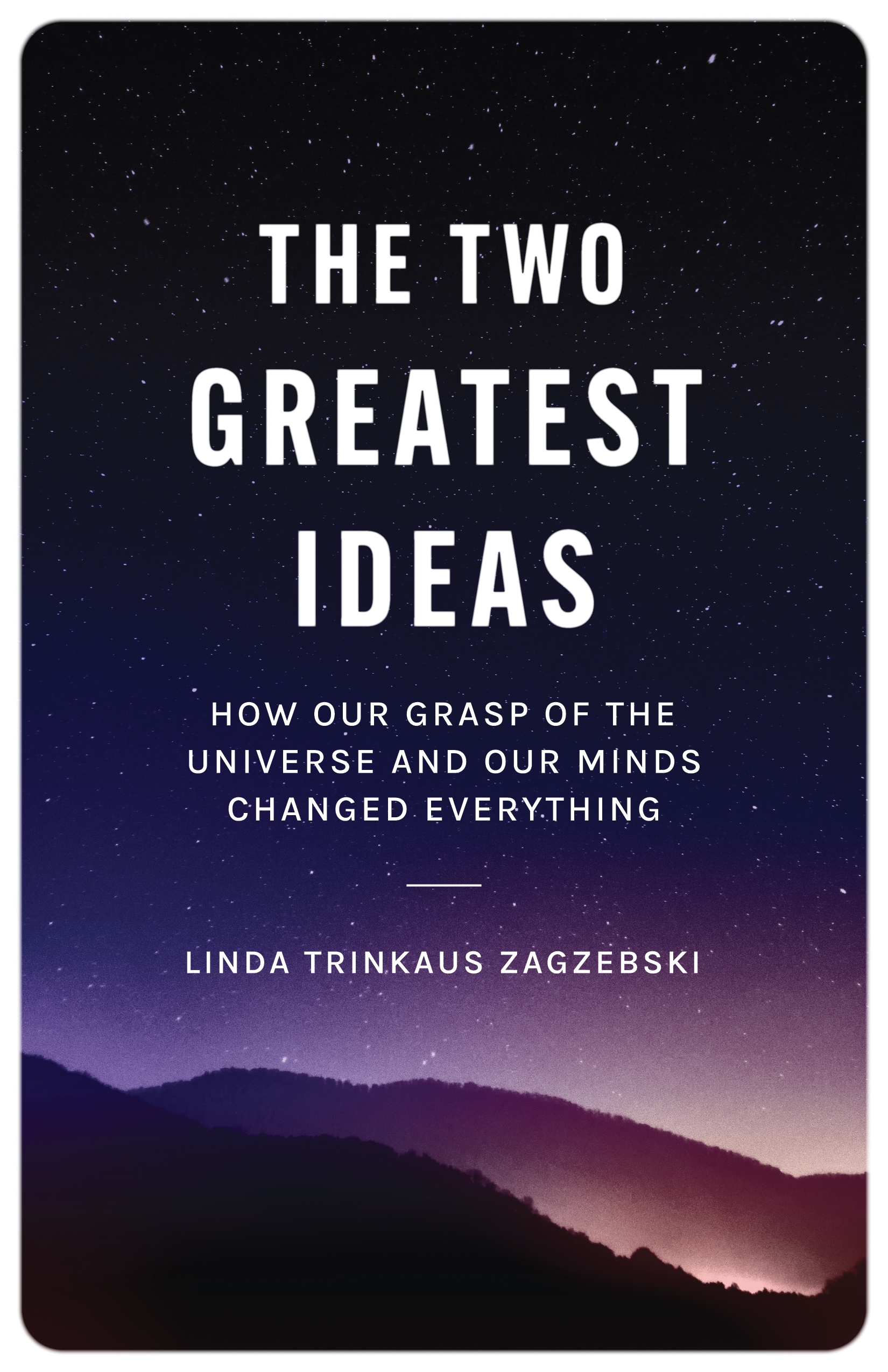
“The Two Greatest Ideas: How Our Grasp of the Universe and Our Minds Changed Everything” with Professor Linda Zagzebski

At the heart of the intellectual and cultural awakening that swept across the globe during the first millennium BCE—an era that witnessed the emergence of philosophy, mathematics, science, and nearly all of the world’s major religions—lies a transformative conviction: the human mind is capable of comprehending the universe. Equally profound is the parallel insight that the mind is capable of reflecting upon and understanding itself.

In her book “The Two Greatest Ideas: How Our Grasp of the Universe and Our Minds Changed Everything” Professor Linda Zagzebski offers a compelling examination of these two foundational ideas in human history. She traces how their dynamic interplay has generated enduring tensions, leaving humanity divided in its understanding of the relationship between consciousness and the cosmos. The book argues that these tensions have long shaped debates over how society should be organized—whether in harmony with the natural order or in pursuit of individual autonomy—and they continue to underlie conflicts on issues such as abortion, the environment, free speech, and identity. The book further envisions the rise of a third transformative idea: that human minds can genuinely understand one another, opening the possibility of grasping reality in its entirety. In this episode of Bridging the Gaps, I speak with Professor Linda Zagzebski.

Linda Zagzebski is Professor Emerita and the Kingfisher College Chair of the Philosophy of Religion and Ethics Emerita at the University of Oklahoma.

We begin our discussion by examining the two central ideas highlighted in Zagzebski’s book: first, that the human mind can grasp the universe, and second, that it can grasp itself. While these notions feel ever-present in contemporary thought, it is easy to forget that they emerged gradually in human history. We consider their significance and origins, tracing early expressions of these ideas in mathematics, astronomy, art, and philosophy. This includes reflections on ancient conceptions of a unified reality governed by a single principle, exemplified in Pythagorean thought, which envisioned the cosmos as bound together by number—a view that continues to echo in Western intellectual traditions. We discuss the discovery of subjectivity and its impact on art and science.

Our conversation then turns to Zagzebski’s proposal of a possible third great idea: that the human mind can grasp another mind. From there, we reflect on enduring questions: Can we ever fully understand the nature of reality? What drives the uniquely human impulse to seek knowledge of the whole? Finally, we delve into the book’s exploration of the concept of self and consider why our curiosity about reality sets us apart from other animals.Overall, this has been an illuminating and thought-provoking discussion.

Complement this discussion with Robots, Artificial Life and Technology Imagined by the Ancients with Adrienne Mayor and then listen to “The Human Journey From Ape to Agriculture” with Professor Peter Bellwood.

By |September 14th, 2025|History, Knowledge, Philosophy, Social Science|

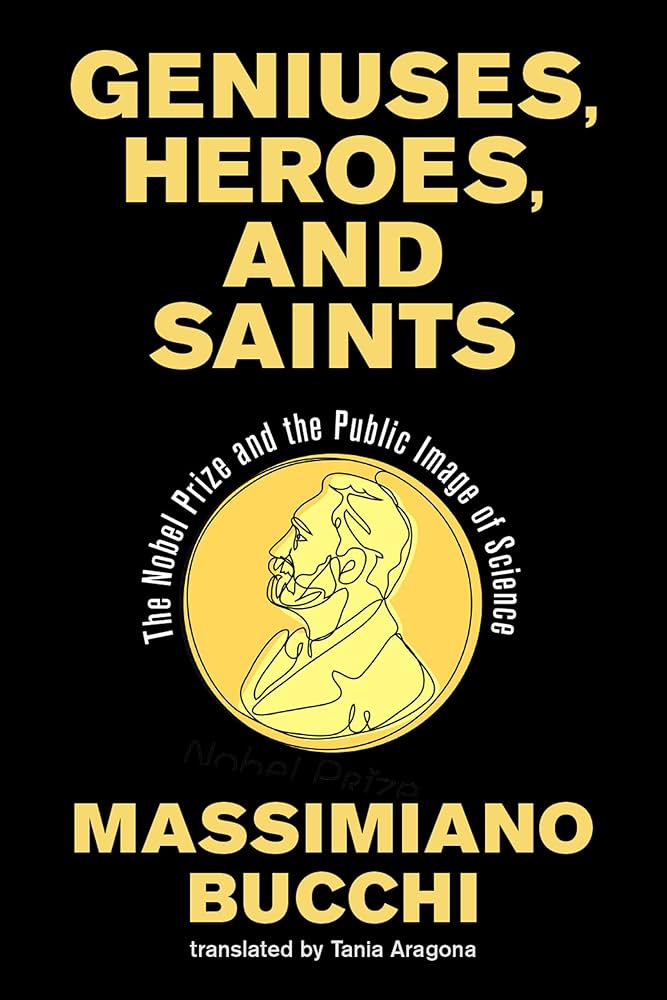
“Geniuses, Heroes, and Saints: The Nobel Prize and the Public Image of Science” with Professor Massimiano Bucchi

In a world where scientific work often feels distant and difficult to grasp, the Nobel Prize makes science visible and understandable in a unique way. It is the most recognized and prestigious award for individual scientific achievement, giving a human face to great discoveries and turning them into powerful stories. The winners could be global figures like Albert Einstein or little-known doctors working in remote towns. Some prizes went to breakthroughs later proven wrong, and many names have faded from memory. Yet, as Massimiano Bucchi shows, the Nobel Prize shaped how people saw science throughout the twentieth century—an image that continues to influence us in surprising ways today.

In his book Geniuses, Heroes, and Saints: The Nobel Prize and the Public Image of Science, Professor Bucchi tells the story of how the Nobel Prize transformed science into something more than a technical field. It became an epic human pursuit, shaped by history and shared with the public. In this episode of Bridging the Gaps, I speak with Professor Massimaino Bucchi.

Professor Massimiano Bucchi is a leading scholar in the field of science communication and Professor of Science and Technology in Society at the University of Trento. He is the former editor of Public Understanding of Science and the author of books, including Newton’s Chicken and the co-edited Handbook of Public Communication of Science and Technology.

We begin the conversation with the three main narratives outlined in the book that define the Nobel Prize. First, the scientist as genius—a creative visionary, a brilliant intellect, often portrayed as a solitary figure with a romantic aura. Second, the scientist as national hero—a symbol of international rivalry played out in a peaceful, rational contest. Third, the scientist as saint—a moral exemplar celebrated for humility, modesty, and complete devotion to science.

From there, we trace the history of the Nobel, its origins, and its early role in European society. We examine the first laureates, notable controversies, and famous recipients—including the story of Einstein’s long-delayed award and the “interesting” aspects of the work that finally earned him the prize.
We also explore the Nobel’s impact on public perceptions of science, the ceremonial “royal touch” that surrounds it, and how the prize might evolve in the twenty-first century. We then discuss science communication more broadly.
Overall, it has been a rich and fascinating discussion.

Complement this discussion with “Sharing Our Science: How to Write and Speak STEM” with Professor Brandon Brown and then listen to On Public Communication of Science and Technology with Professor Bruce Lewenstein

By |August 24th, 2025|History, Podcasts, Research, Social Science|