
The idea that evolutionary theory applies far beyond biology is not new. Yet one major obstacle to the broader acceptance of a generalized evolutionary theory is our tendency to begin with biology and extend outward from it. This approach obscures an important historical fact. Long before scientists developed theories to explain the evolution of life, scholars in fields such as linguistics, economics, and technology had already proposed ideas about change that were evolutionary in the modern sense.
The evolutionary biologist Stephen Jay Gould even suggested that “Darwin may have cribbed the idea of natural selection from economics.” Beginning with biology can create the misleading impression that evolutionary processes in areas such as language, technology, or economics are weaker or derivative forms of evolution. In reality, evolutionary processes are largely independent of the substrate on which they operate. They generate diverse outcomes—organisms, technologies, and cultural practices—that are well adapted to particular functions.
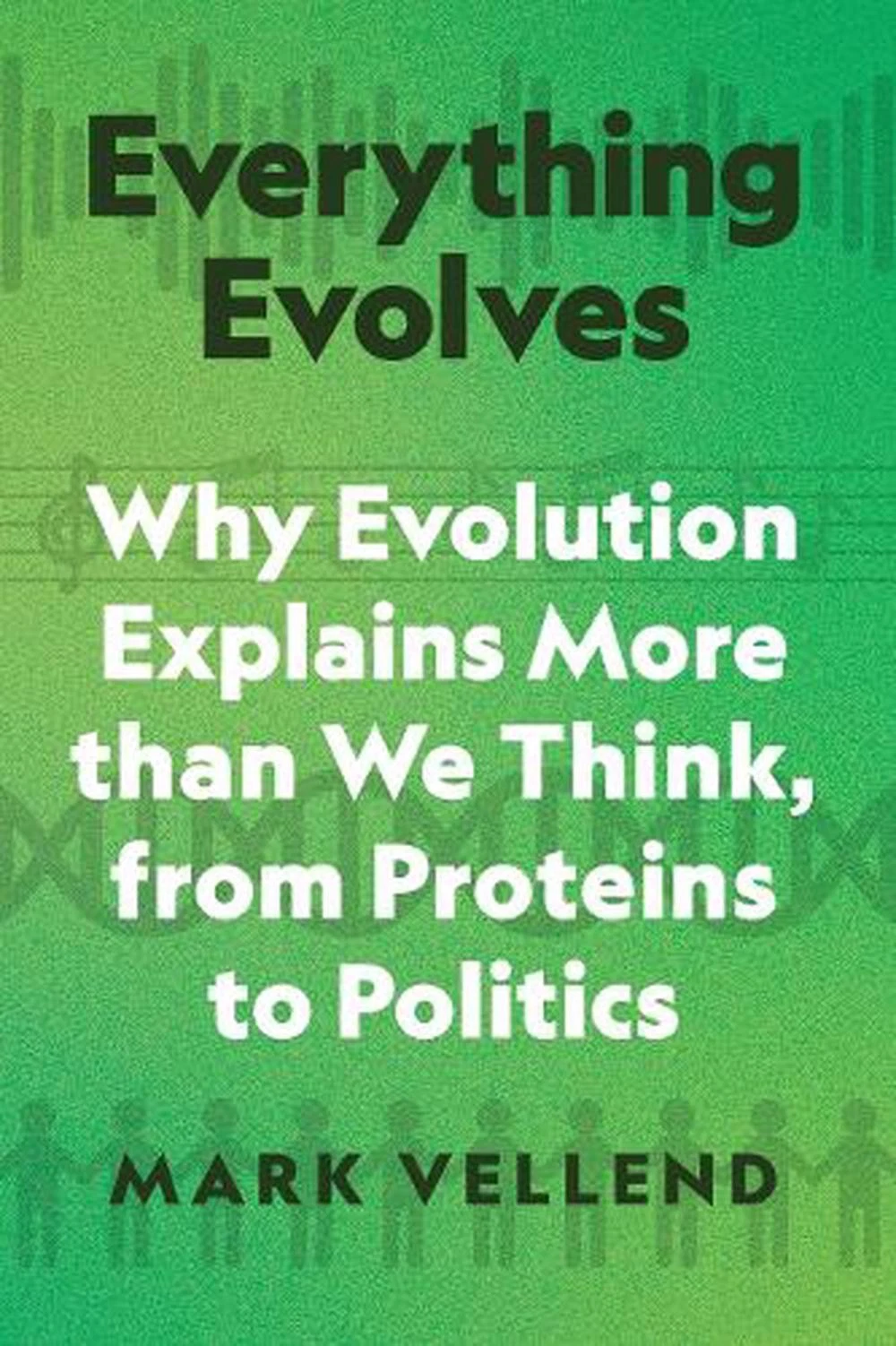
In his book Everything Evolves: Why Evolution Explains More than We Think, from Proteins to Politics, Professor Mark Vellend shows how evolutionary dynamics shape many aspects of the world around us. He also explores how evolutionary principles are being applied to practical challenges, from increasing the global food supply to developing artificial intelligence systems that can evolve solutions to complex problems.
In this episode of Bridging the Gaps, I speak with Professor Mark Vellend.
Mark Vellend is a professor of biology at Université de Sherbrooke and a Fellow of the Royal Society of Canada.
We begin our discussion with an intriguing idea from the book: reality can be understood through two broad sciences. The first is physics. The second is the science of evolvable systems. We explore this distinction in detail.
We then turn to the concept of generalized evolutionary theory and discuss why it is important to communicate this broader framework to a wider audience. In this context, we also touch on the argument that the strong emphasis on Darwin can sometimes be a distraction from the larger evolutionary perspective.
Next, we examine several examples that illustrate how generalized evolutionary processes allow different artifacts and systems to evolve over time. We then discuss a framework presented in the book that explains how generalized evolution operates. This framework is described using the metaphor of a soundboard, where each knob represents a distinct variable in the evolutionary process. We explore this “Evolutionary Soundboard” in detail.
Our conversation then turns to the role of randomness and the ways systems can improve over time through deliberate design. We also discuss the importance of diversity, which enables and sustains evolutionary processes.
Overall, the discussion is both engaging and informative, raising a number of thought-provoking ideas.
Complement this discussion with “The Evolution of Biological Information: How Evolution Creates Complexity, from Viruses to Brains” with Professor Christoph Adami and then listen to “The Network of Life: A New View of Evolution” with Professor David Mindell.

Connect With Us